
In our latest instalment of ‘Our Gallivanting’, WHS Steering Committee members Eleanor Peters and Hannah Speed put the spotlight on the recent annual conference hosted by the Women’s History Network, and share their reflections. Eleanor is currently an independent scholar and is working on a project to commemorate the centenary of the founding of the Electrical Associaton for Women. Hannah is a PhD student at the University of Glasgow, researching ‘Women’s Life-writing and the Suffrage Campaign in Scotland, c.1870s-1970s’.
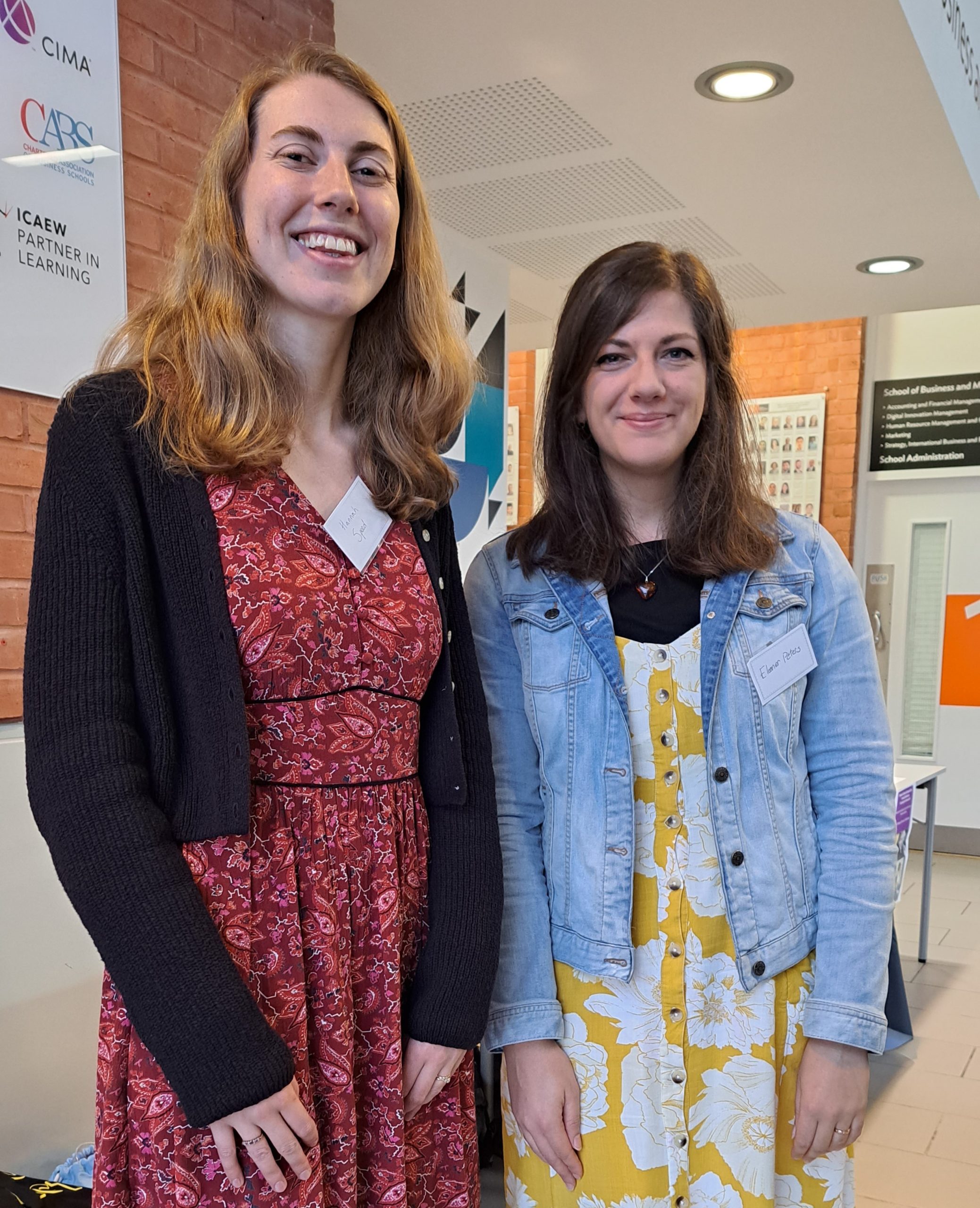
Earlier this month, between 5-6 September, we attended the Women’s History Network Annual Conference hosted at the spectacular Royal Holloway, University of London. This marked the first in-person WHN conference in five years, underscoring the importance of the event. The theme of the conference was ‘Curating the Female Self’, drawing attention to the developments in women’s history over the last few years as scholars and researchers take different approaches to agency, empowerment and identity, and to issues of intersectionality and context-specific identity-formation. The conference attracted a wide range of papers from varying perspectives and disciplinary approaches. We were fortunate to each deliver a paper, sharing a slice of the research undertaken by WHS members.
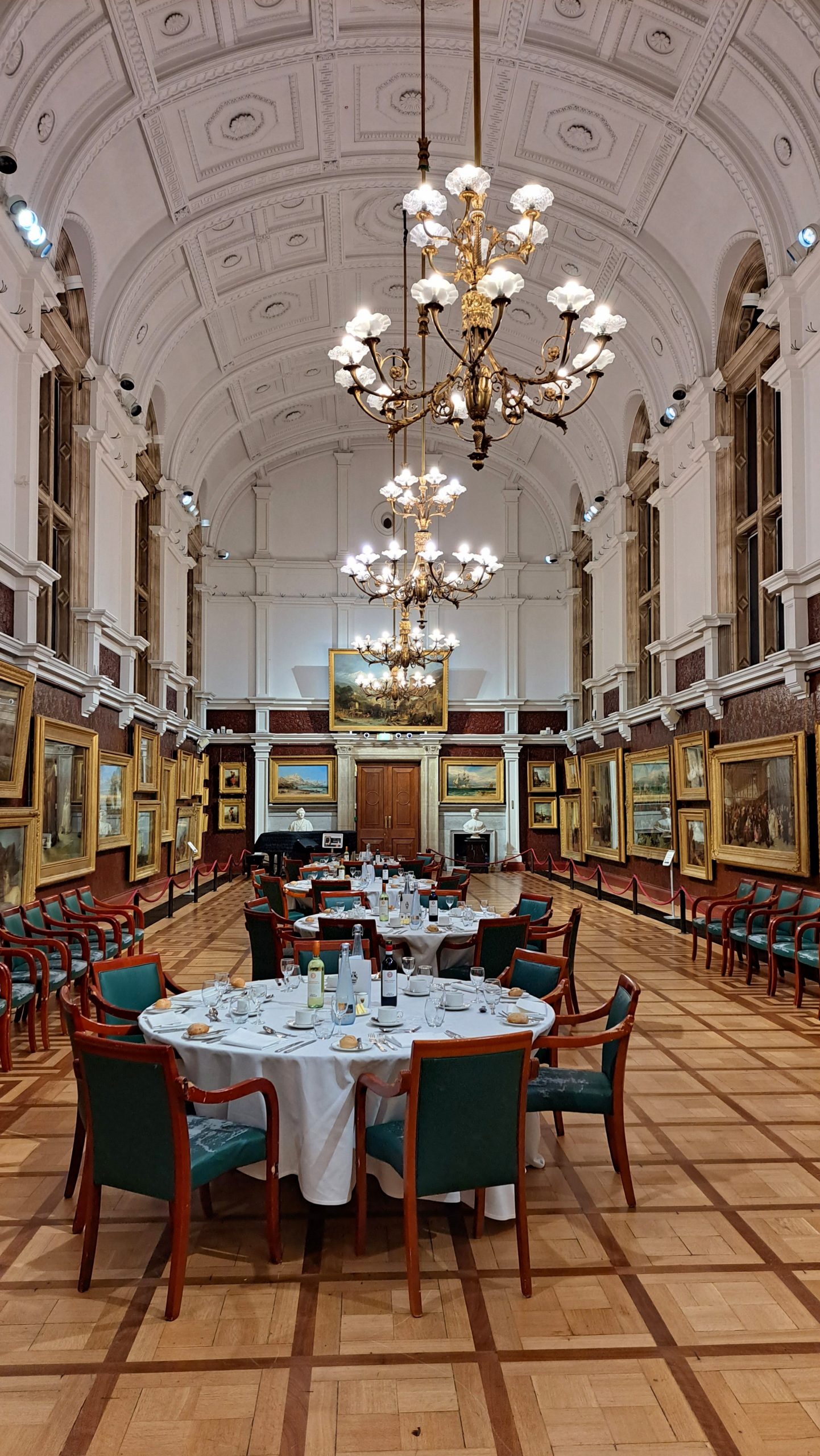
Royal Holloway was an apt setting for the ‘Curating the Female Self’. Originally a women-only college, Elizabeth Jesser Reid, a social reformer, and philanthropists Thomas and Jane Holloway founded Royal Holloway to provide women equality in education and opportunity. Before the panels started, a true highlight of the conference was the privilege to dine in the Picture Gallery in the stunning Victorian Founder’s Building, the focal point of Royal Holloway’s campus. The gallery houses the Thomas Holloway collection of Victorian paintings. We ate surrounded by British landscapes, the streets of Cairo and Venice, sentimental children and animals, ferocious polar bears, Royalty, and rural workers. The benefits of returning to in-person conferences were clear, as attendees were eager to meet old colleagues and make new connections with like-minded researchers.
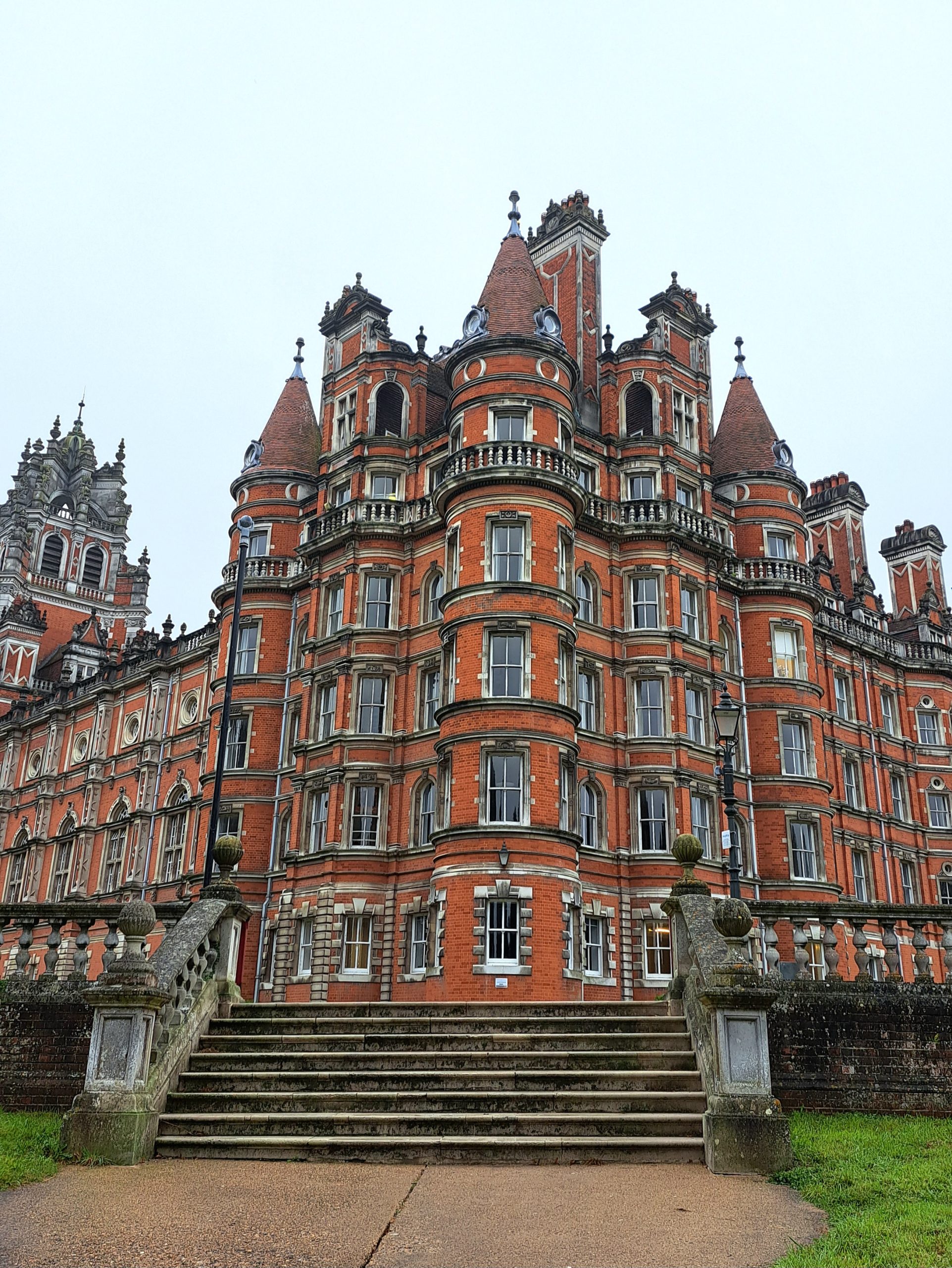
For the opening keynote lecture, Kate Cooper, professor of history at Royal Holloway, instigated a fascinating discussion into Ancient and Medieval women’s agency and the constraints imposed by gender, legal standing, and social class. Most pertinent was the question of what a historian can do when faced with a lack of sources, and whether fiction, or creative readings and juxtapositions of the scant existing sources, allow us the opportunity to imagine Ancient women’s voices. This question of how to reconstruct the lives of women who have been marginalised in history, recognising their voices and opportunities for agency without painting an unrealistically celebratory picture, is an abiding challenge of women’s history, and was grappled with by many of the subsequent papers.
The second keynote lecture, on the topic of curation, was delivered jointly by Professor Margaretta Jolly, based at the University of Sussex, and Pauline Rutter, an archival artist, poet and researcher. Margaretta reflected on the challenges and successes of Unfinished Business, a British Library exhibition exploring the history of the women’s movement, which ran from 23 October 2020 – 21 February 2021. From a curator’s perspective, how do you select the objects which best represent the vast terrain of the women’s movement with all its contradicting, divergent strands of thought? And, how do you determine which exhibits will draw a large and diverse audience, some of whom may be visiting the British Library for the first time? Pauline gave an uplifting performance of her poetry and walked us through her process as an archival artist, conducting archival research and then responding to her findings through art and public engagement. The creative outputs of her work crossover into racial justice, environmental and community activism.
The welcoming and inclusive atmosphere of the conference was demonstrated by the sheer mix of scholars working at all levels, including those without an institutional affiliation and those working outside academia. This could be seen in microcosm in one of the first panels, ‘Women as Political Actors and Agents’. It opened with a paper from Mari Takayanagi, Senior Archivist at the Parliamentary Archives, who offered a fascinating insight into the material culture of Margaret (Peggy) Herbison, Labour MP for North Lanarkshire 1945-1970. The contents of Herbison’s desk drawer revealed an uncurated glimpse into her career and personal life. Lisa Berry-Waite, representing Parliament’s Heritage Collections, spoke on Margery Corbett Ashby’s use of gendered appeals in her election campaigns, and independent scholar Judy Greenway brought poet and social reformer Elizabeth Gibson Cheyne back to the foreground after decades of being eclipsed in the historical record by her husband and brother.
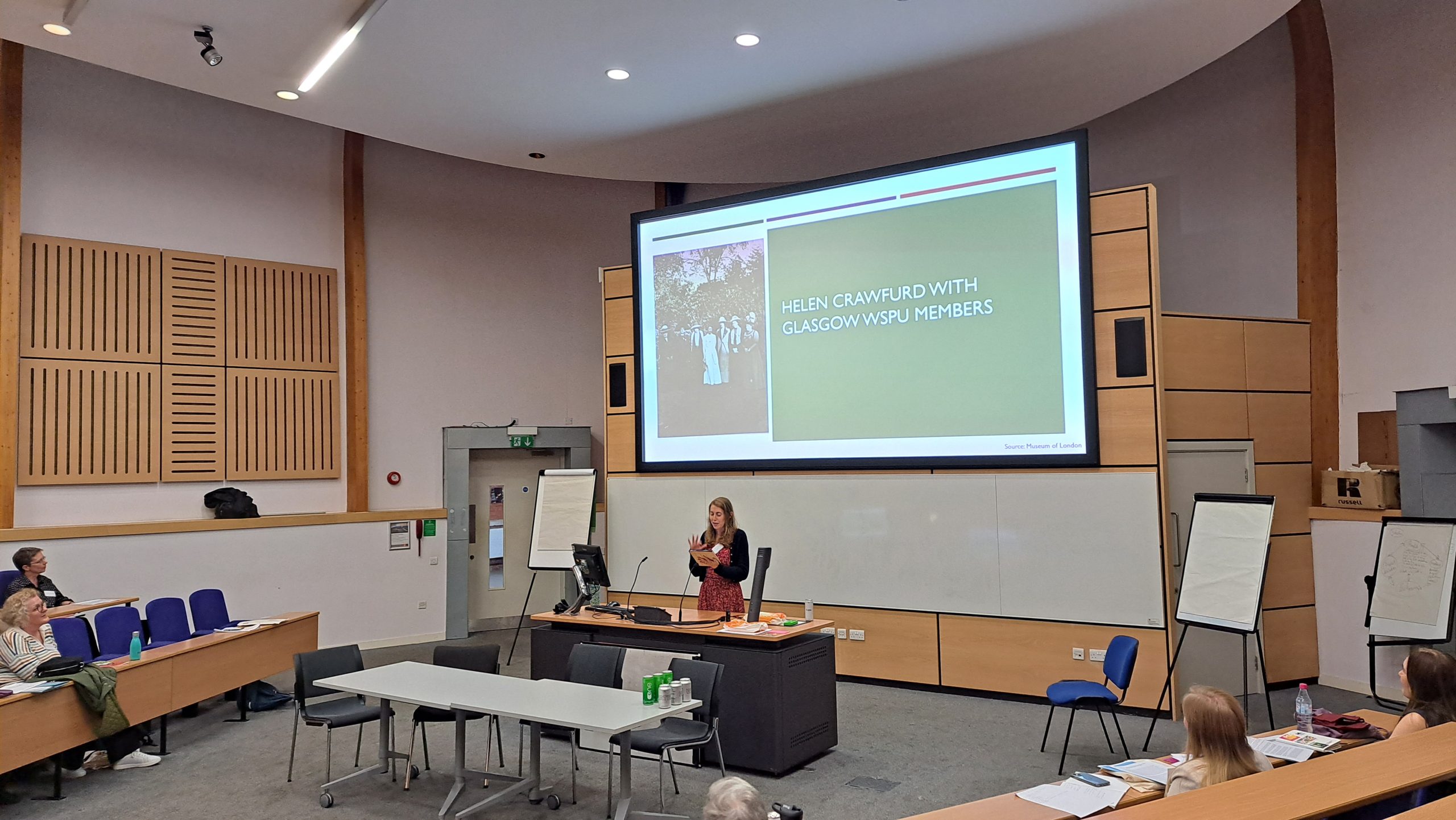
Hannah’s paper was delivered as part of this first panel, exploring how Scottish suffragists and suffragettes used life-writing as a feminist tool to celebrate women’s achievements and the significance of relationships, such as family and friendships, to their campaign. By focusing on lesser-known Scottish campaigners, Hannah shared new perspectives on how suffrage autobiographers built communities beyond the well-documented London-based suffragette leaders.
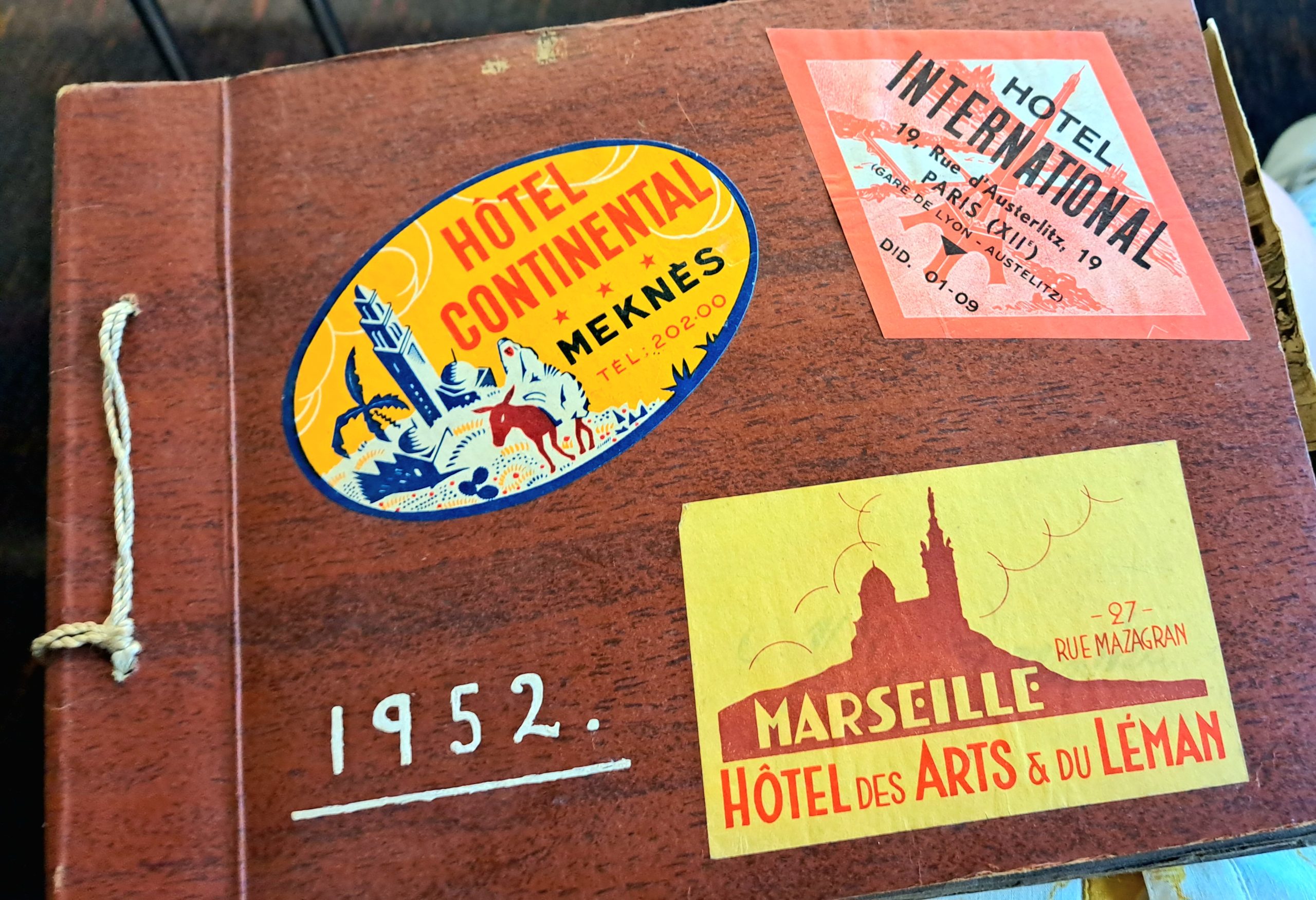
Other sessions explored ‘Beauty, Body, Fashion’, ‘Home’, and ‘Women, Empire and Identity’. ‘Representing the Working Woman’ offered a cross-section of research into nineteenth and twentieth-century employment opportunities for women, including the experiences of ‘woman barristers’ (and the problems their hairstyles posed to wearing wigs in court!), domestic servants and professional photographers. Thanks to Gráinne Goodwin, Senior Lecturer in History at Leeds Becket university, the ‘Family’ panel allowed the opportunity to handle women’s post-war holiday albums, offering literal snapshots into women’s tourist experiences and women’s role as the curator of their family’s photo albums. The ‘Self-fashioning Professionalism’ panel showcased the sheer variety of sources and approaches being deployed in women’s history today, from Chiara Harrison Lambe’s art historical analysis of Stela Steyne’s nude self-portraiture, to Carol Dyhouse’s reflections on several generations of her family’s relationship with clothing, to Janet Butler’s discovery of how Lily Louden curated her family’s history in a hatbox of papers which was only to be opened at the millennium.
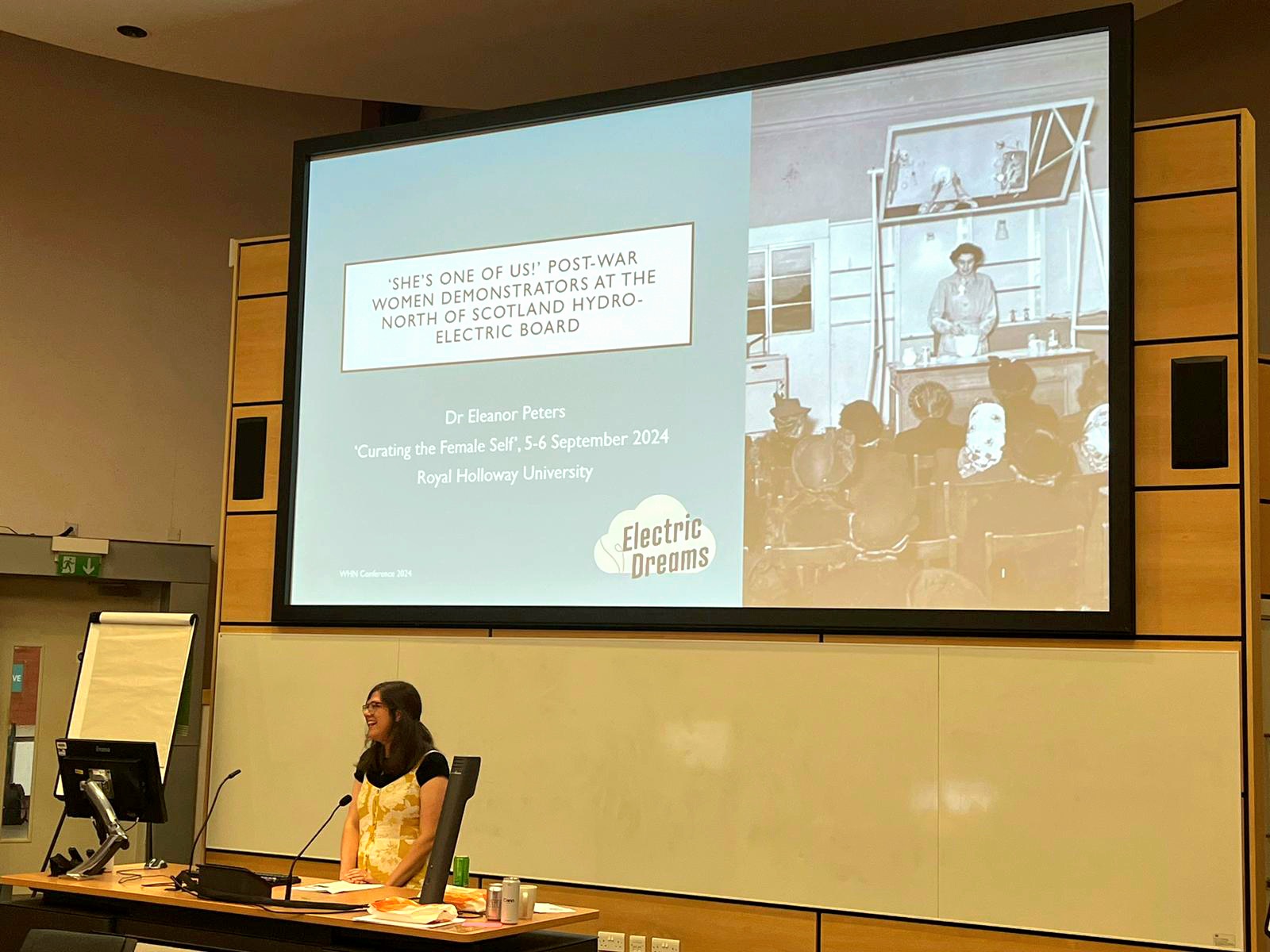
Eleanor delivered the final paper of the conference, highlighting the work of post-war women demonstrators at the North of Scotland Hydro-Electric Board who travelled around the Highlands and Islands educating inhabitants about using electricity safely and efficiently in home. This paper was given as part of a lively panel drawing attention to the centenary of the founding of the Electrical Association for Women. Henrietta Heald drew attention to key figures in the EAW, Nina Baker explored the EAW’s branch life, and Lucy Wood considered the role of women inventors in the early transition to electricity.
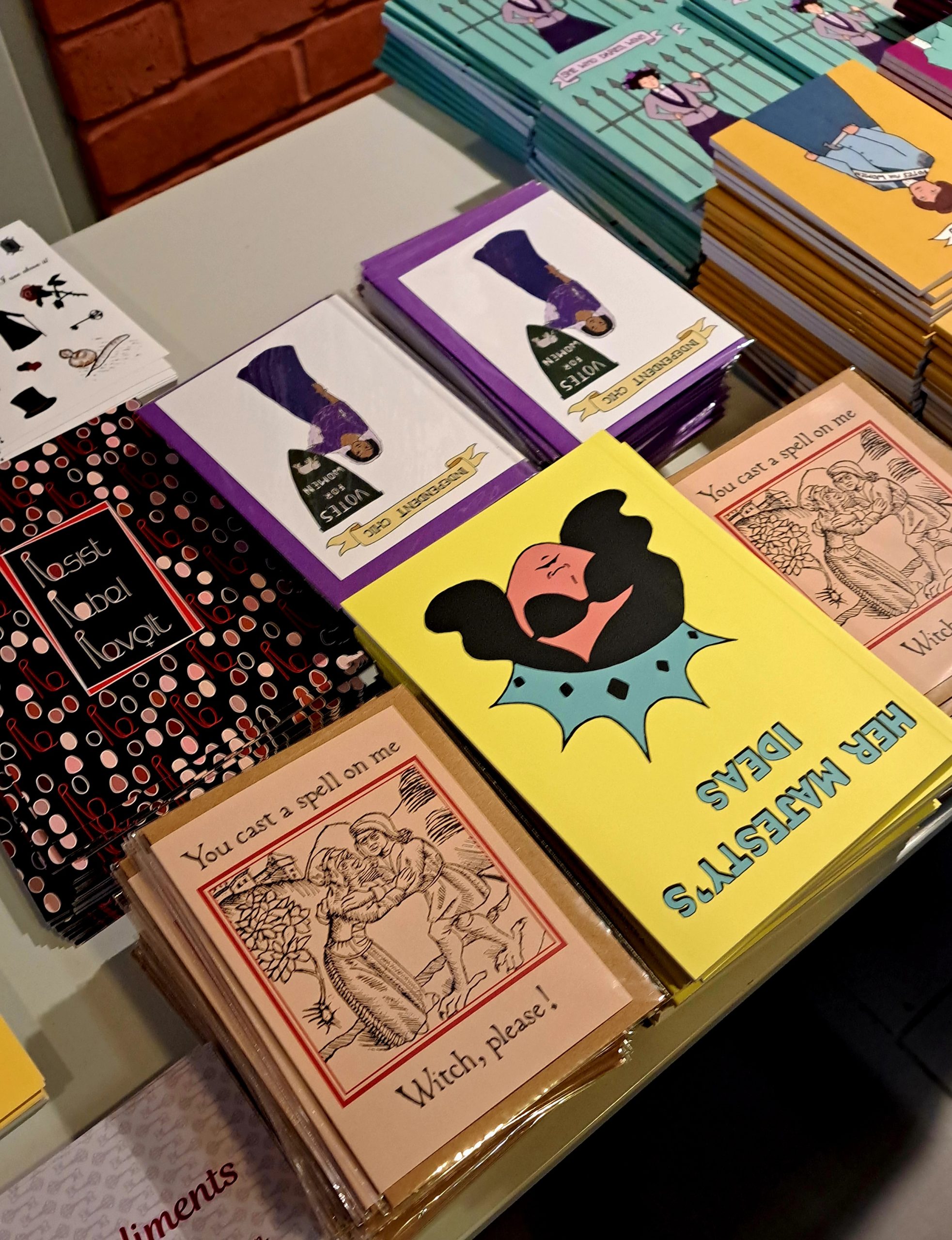
A final surprise were the eye-catching feminist notebooks, cards and tote bags kindly donated to conference attendees by Clavis & Claustra.
A huge thank-you to WHN for organising this illuminating conference in such an inspirational venue. Fortunately, WHN have confirmed their annual conference will run in 2025 – hopefully we’ll be there!
Hannah will be sharing her research for WHS members at our upcoming Social on the 30th of October.
Text Copyright © 2024 Eleanor Peters and Hannah Speed
Cite this page as: Eleanor Peters and Hannah Speed, ‘Women’s History Network Annual Conference 2024 – ‘Curating the Female Self’’, 24 September 2024, https://womenshistoryscotland.org/?p=3395, accessed [todays date]
To contribute to our blog, please get in touch!