
MSc student, Sophie Morrice, from the University of Strathclyde spent her work placement looking into how we can recover LGBT+ histories to incorporate more queer women in the landscape, through our Mapping Memorials project. Here’s the results of her research.
Unfortunately our Mapping Memorials site is down for maintenance just now
LGBT+ histories have been recorded as far back as ancient civilisations, with same-sex relationships, and transgender identities, existing as long as human history has been written. However, it remains frustratingly difficult to uncover the lives and experiences of LGBT people throughout the centuries. This has arguably been worsened by the British educational systems which, until very recently, has shied away from LGBT experiences out of fear of ‘controversy.’ Certainly, it was not until I began studying at university in 2017 that I was introduced to the plethora of sources and literature that expand upon the experiences of this often-overlooked group of people. However, reflecting specifically upon the affections between Scottish women throughout history has gleaned results that can be considered far from controversial. In fact, the most controversial aspect of the study of Scottish LGBT+ women was undoubtedly the consistent societal stigma, and the lack of both historical precedence and posthumous commemoration that is granted to them.
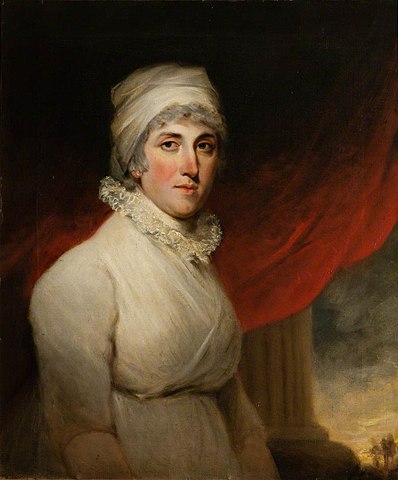

Left: Mary Bristow, source link Castle Fraser; Right: Elyza Fraser, source link
While working with Women’s History Scotland on their Mapping Memorials project, my research has centred around the lives of Scottish LGBT+ women, their contributions to wider society, and how they have subsequently been remembered. However, identifying sapphic women during centuries worth of homophobia and societal stigma is not a task for the faint-hearted. The most obvious way in which we can attempt to do so is by considering relationships between women that were potentially romantic. Although, given the significance of labels to many people in the LGBT+ community, one must also be wary of attributing an identity to someone which is inaccurate, even if done posthumously. A somewhat well-known example of assumed sapphic affections, and one that has already been previously articulated on the Mapping Memorials map, is that of Mary Bristow and Elyza Fraser. The two resided together at Castle Fraser in Aberdeenshire upon Fraser’s inheritance of the property. While there is little physical evidence to suggest the two were a romantic couple, such assumptions have generally been made not only as a result of their consistent companionship from 1781 until Bristow’s death in 1805, but also due their annual celebration of the anniversary of their first meeting, and Fraser’s active involvement in the landscaping of the land at the castle. Her interest in the estate was somewhat unconventional at the time as a result of her gender, with Andrew Wright in his 1778-1784 report The Present State of Husbandry in Scotland stating:
“this lady is a miracle for farming. Her genius must be uncommon, to excel so eminently in a vocation that nature deems to have confined to the male sex.”[1]
While this cannot be said for all lesbian and bisexual women, many historians since the late 1990s have drawn links between typically ‘masculine’ traits and women who harbour them, considering them to be potential identifiers of lesbianism or bisexuality where other evidence falters.[2]
Despite such ‘identifiers’, lesbian relationships have often escaped the fate of their male counterparts who have fallen victim to homophobic Acts which have outlawed male homosexuality, such as the 1861 Offences Against the Persons Act in the UK. However, this was of course not as a result of societal acceptance of sapphic affection. Instead, it was simply not believed to be real. In the case of two Scottish women teachers – a Miss Jane Pirie and a Miss Marianne Woods – who were, in the early 19th century, accused of “indecent behaviour”, were deemed innocent of the accusations that had been brought against them by the judges present in a libel case against the person who had made such assertions. Despite the lack of criminal punishment, the two women still suffered unfortunate consequences as a result of the case – the court proceeding took nine years and left them severely struggling with money and separated as a couple. It is clear that, particularly prior to the 21st century, assuming that a woman was a lesbian or bisexual could have a long-term, detrimental impact, even if it is not a judicial one. The legal outcome, however, was not the result of an absence of evidence which, while circumstantial, had been brought to light by a grandmother of a pupil at the boarding school the two had opened who had heard them communicate in a seemingly sexual manner, but because to the all-male judges, romantic and sexual desires articulated between two women were unfathomable.[3]
This was a recurring trend throughout the 19th century. Despite the criminalisation of male homosexuality, such laws never existed for lesbians. As such, lesbians, despite the social stigma, were granted greater freedoms than their male counterparts which became known as the ‘lesbian paradox’ and was a point of contention particularly in the 1950s when the topic of male sexuality entered the mainstream political conscious in Scotland, and the U.K. more broadly. Ultimately, politicians were conflicted on whether to admit women could experience romantic and sexual attraction to each other and outlaw it in line with male homosexuality, or to simply tackle what they deemed ‘a crisis of masculinity’, rather than one of femininity.[4]
Continuing research into the lived experiences of the LGBT+ community regardless of whether they are Scottish, or indeed women, requires a level of sensitivity to the significance of labels and how one defines themselves. What should also be considered is the private matter of many of the affairs that we seek to understand, and thus there is a moral and ethical standard that should be upheld when divulging into the relationships of marginalised groups. It is accurate to stipulate that the lack of exposure granted toward lesbians, bisexual women and transwomen and their histories is largely a consequence of institutional misogyny, transphobia, homophobia and overall societal stigma. However, the lack of personal documentation of experiences with gender identity and same-sex relations and the desire for secrecy are not solely out of fear of judgement. Despite the importance of understanding and commemorating those who we deem as martyrs due to their seemingly more difficult circumstances, historical research is in many ways a privilege and respect is necessary, as we are not necessarily entitled to these histories.
[1] AOC Archaeology Group, “Elyza Fraser and the Fraser Mausoleum,” 5th December, https://www.aocarchaeology.com/news/article/fraser-mausoleum.
[2] Clark, Anna, “Anna Lister’s Construction of Lesbian Identity,” Journal of the History of Sexuality, Vol. 7, No. 1 (1996): 24.
[3] Moore, Lisa. “’Something More Tender Still Than Friendship’”: Romantic Friendship in Early-Nineteenth-Century England,” Feminist Studies, Vol. 18, No. 3 (1992): 513-514.
[4] Morgan, Rebecca Jane, “The Lesbian Paradox: Homophobia, Empire and the Law in 1950s Britain,” 11th June 202, https://rebeccajanemorgan.medium.com/the-lesbian-paradox-homophobia-empire-and-the-law-in-1950s-britain-4ea1b7732b0d.