
In our latest instalment of ‘Our Gallivanting’, WHS Steering Committee member Hannah Speed shares the highlights of the ‘Women in Revolt! Art and Activism in the UK 1970-1990’ exhibition at the Scottish National Gallery of Modern Art in Edinburgh. Hannah is a PhD student at the University of Glasgow, researching ‘Women’s Life-writing and the Suffrage Campaign in Scotland, c.1870s-1970s’.
‘We say no to empty abstractions, to the ‘art for art’s sake’ philosophy of the privileged white middle-class male artworld. We the oppressed cannot afford this empty play with words and forms, for us the important task is to convey to people, to women – their dignity and strength and beauty.’[1]
This quote opens the new exhibition, ‘Women in Revolt! Art and Activism in the UK 1970-1990’ at the Scottish National Gallery of Modern Art in Edinburgh. The rest of the show illustrates these sentiments ambitiously and comprehensively; what follows is a kaleidoscope of art from the women’s movement in the late twentieth century.
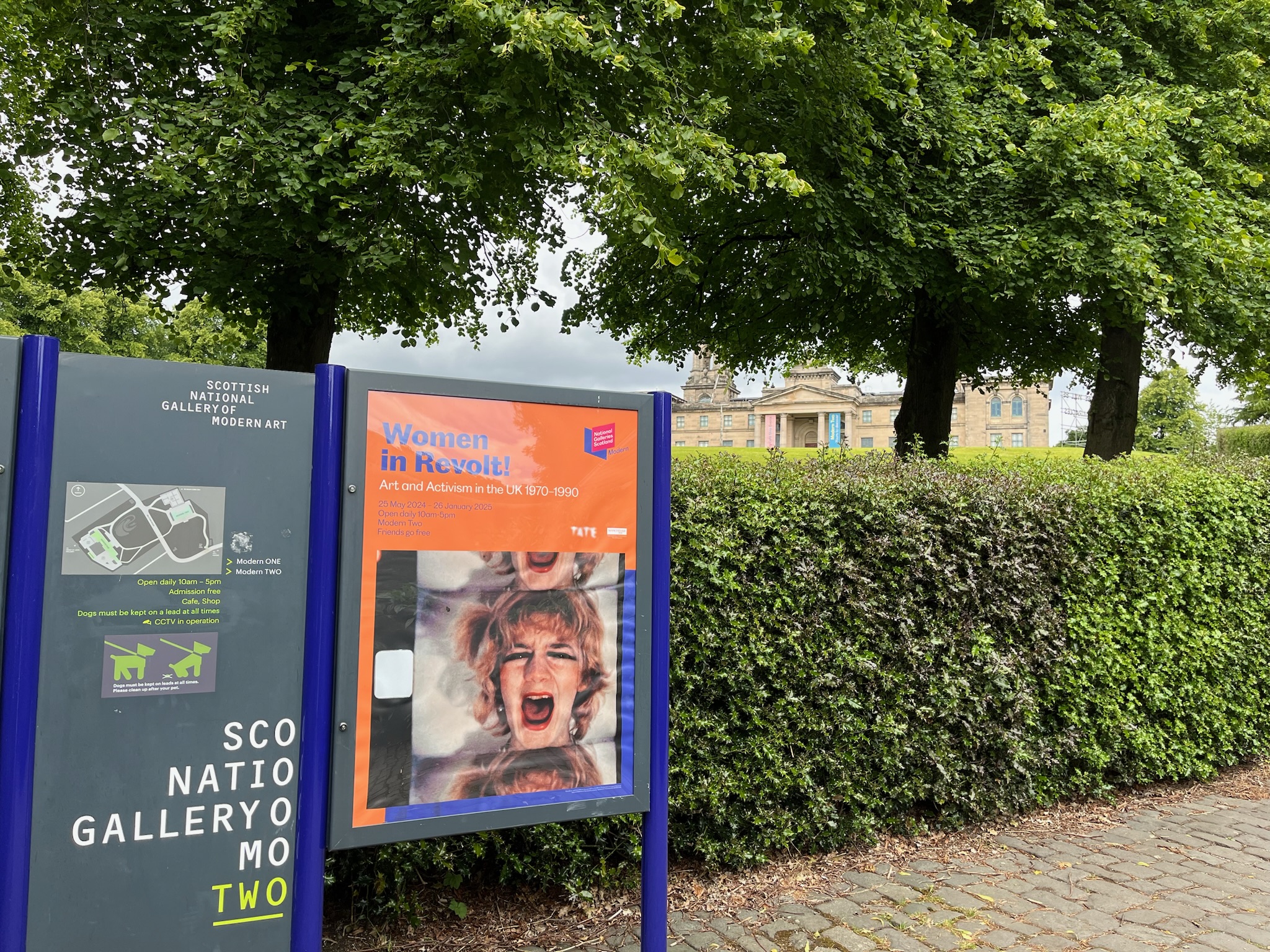
The exhibition is particularly strong in illuminating the breadth of activism which was happening at this time. It takes an intersectional approach, encompassing the art of multiple campaigning groups, from the revaluing of reproductive labour in the ‘wages for housework’ campaign, to the intersection of gender and race in the work of groups including the Organisation of Women of Asian and African Descent, to explorations of sexuality, and disabled lesbians’ organising through groups such as GEMMA. It takes a similarly broad approach to the forms of art included, from huge canvases, to ceramics, textiles, music, film, photography, and tiny art works which were posted to fellow activists. My two personal highlights of the exhibition illustrate this range: Sue Crockford’s documentary ‘A Woman’s Place’ offers a fascinating opportunity to eavesdrop on the speeches at the first British women’s liberation conference, displayed on a crackling black and white television, while Nina Edge’s installation, ‘Snakes and Ladders’, is a floor-to-ceiling statement in vividly colourful batik and ceramics.
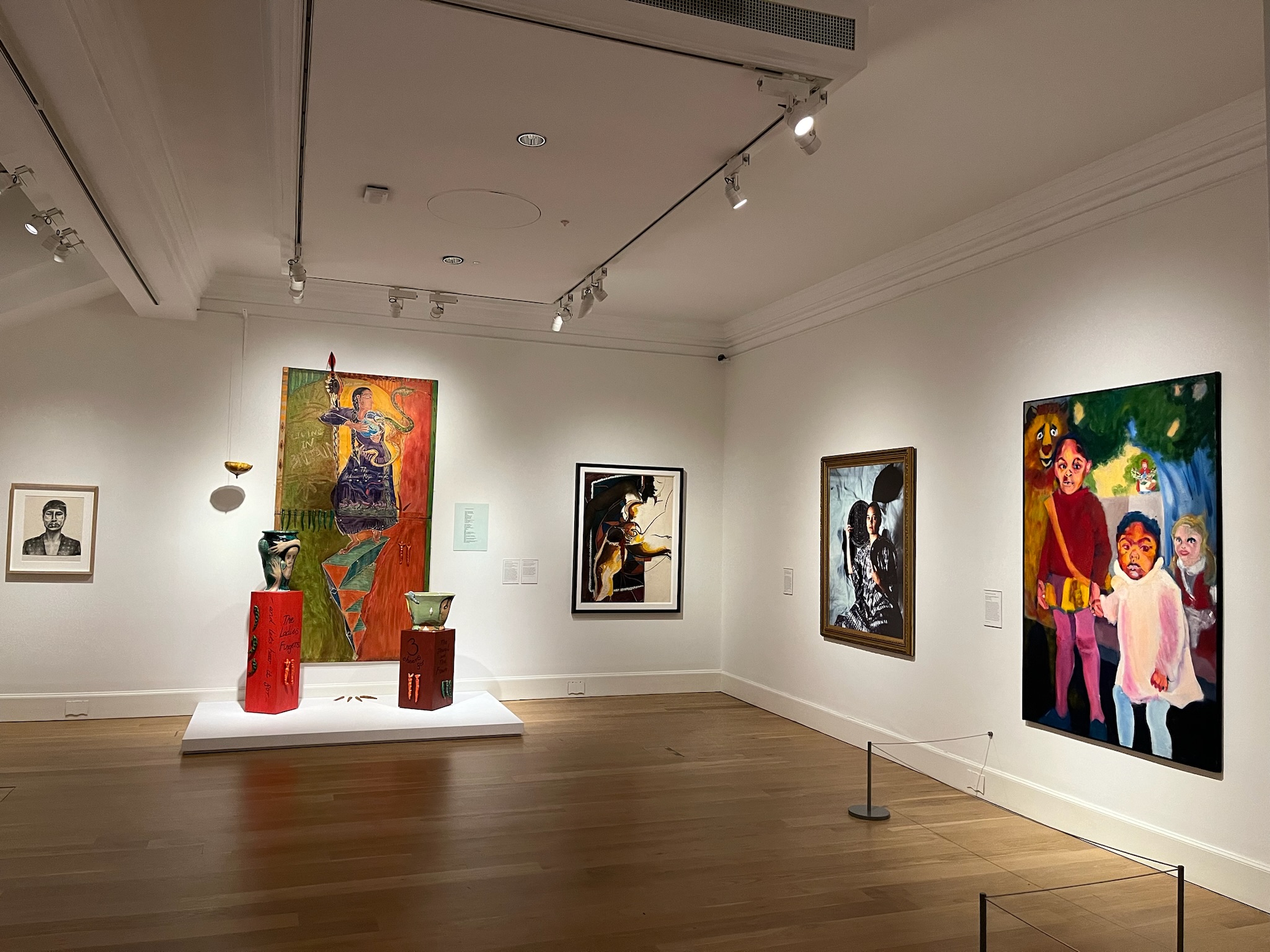
The show has recently transferred to Edinburgh from the Tate Modern, developed in a partnership between the Tate, the National Galleries of Scotland and the Whitworth Gallery, Manchester. This Britain-wide expertise and clout is evident in the range of loans in the exhibition from nationally significant collections such as Glasgow Women’s Library and the Feminist Archive North and South. The rooms are ordered around broadly chronological topics. After a helpful contextual introduction, themes include peace and Greenham Common, the body, countercultures, work in all its forms, anti-racism, and sexuality. This is a large exhibition, which fills the whole of Modern Two, and each room is crammed with treasures to explore. Indeed, the art works are so lively they seem almost to be straining against the traditional white walls and ordered presentation of an art gallery.
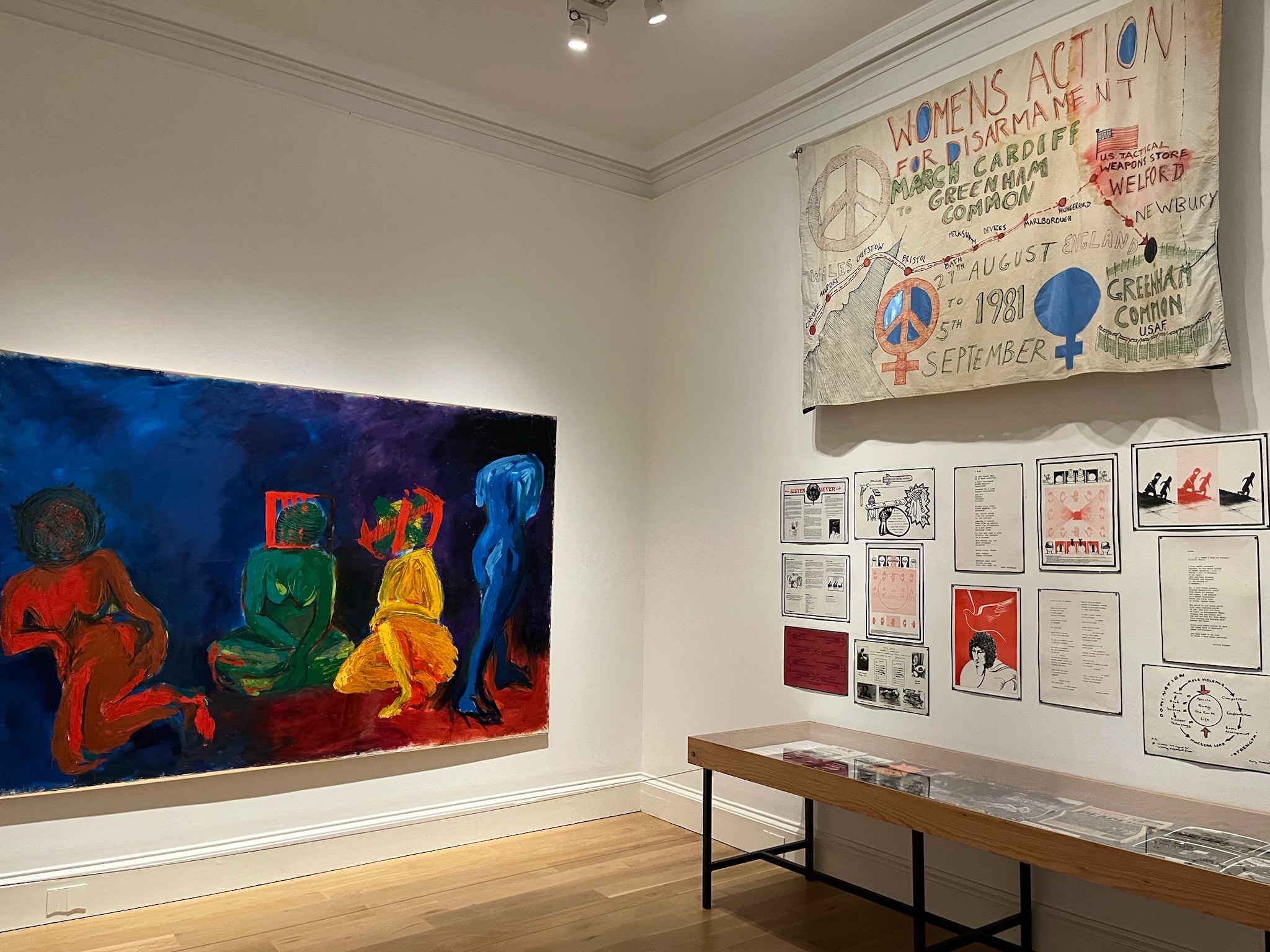
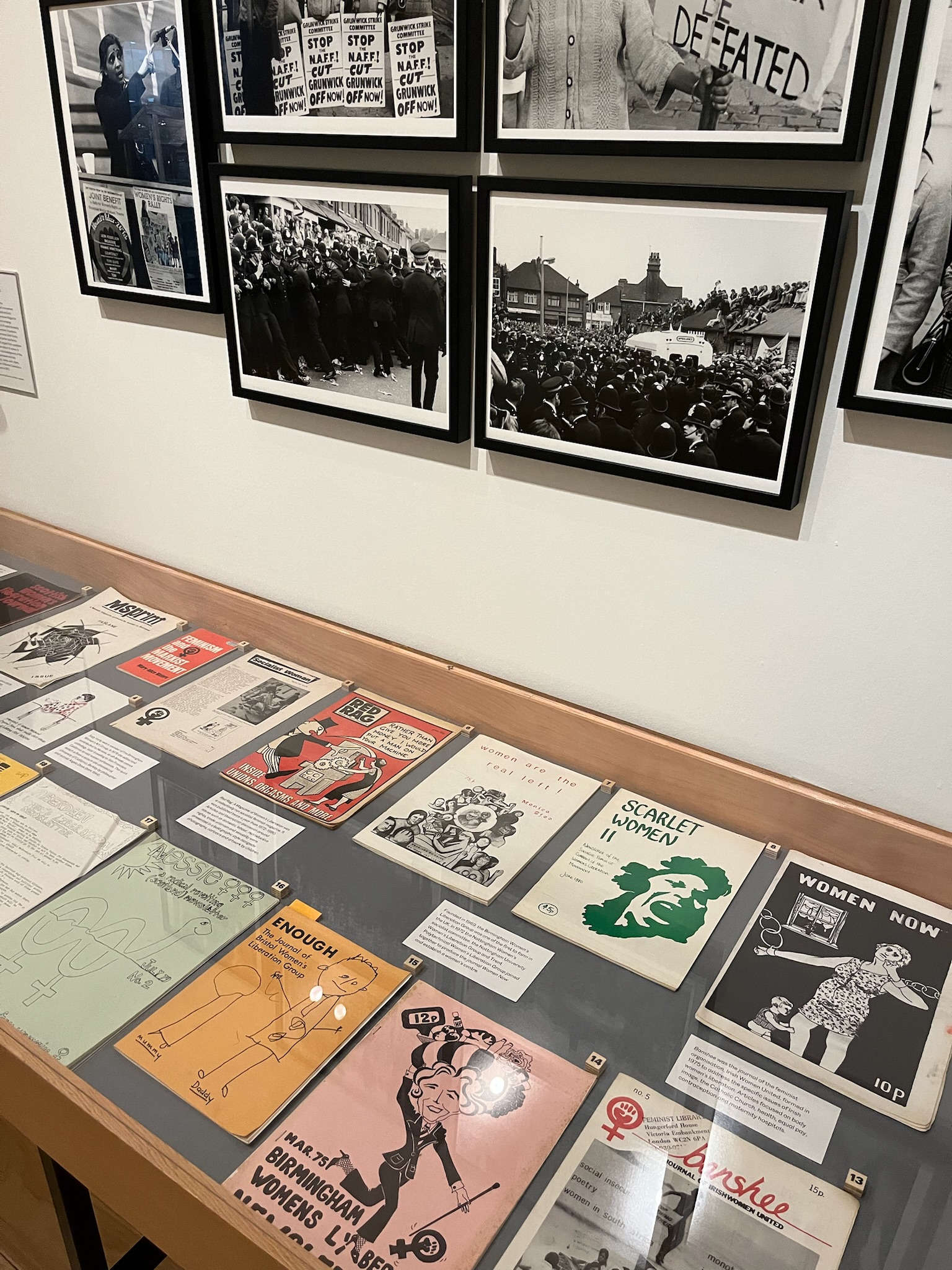
This is an exhibition which will immediately appeal to historians, as it has as much of a historical focus as an artistic one. Most of the contextual signs and labels focus on explaining the organisations and the individuals involved. Many rooms have display cases of magazines, pamphlets, posters and pin badges which fellow historians will love poring over. In fact, if you’re an ‘enthusiastic beginner’ in art theory like me, you might wish for a little more information about the artistic context. Clearly the women’s liberation movement spawned new attitudes and approaches to art, and I would have liked to know more about how the media and style reflected this, and whether this had an influence elsewhere in the art world. These works are political rather than commercial, in some cases using whatever means the artists had available or affordable to them, in others using innovative media to challenge gendered assumptions.
Overall, the cumulative effect of ‘Women in Revolt’ is of witnessing an eruption of passionate and political art. It left me feeling inspired, and keen to know more.
‘Women in Revolt’ runs at Modern Two, National Galleries of Scotland, Edinburgh, until 26th January 2025. You can find out more here. If you can’t make it to the exhibition, there’s also an accompanying podcast and reading list.
[1] Anne Berg and Monica Sjöö, Images of Womanpower – Arts Manifesto (1971)
Text Copyright © 2024 Hannah Speed
Cite this page as: Hannah Speed, ‘Women in Revolt! Art and Activism in the UK 1970-1990′, 14 July 2024, https://womenshistoryscotland.org/?p=3286, accessed [todays date]
To contribute to our blog, please get in touch!
Excellent blog, Hannah. You’ve really captured the feel of the exhibition. There is a huge amount of stuff to see. I especially loved seeing copies of books and pamphlets from the Women’s Liberation Movement. I saw it at the Tate and look forward to seeing it again in Edinburgh.