
Isabella Fyvie Mayo (1843 – 1914): Scottish Evangelical Writer and Campaigner Against Racism, Imperialism and Animal Cruelty
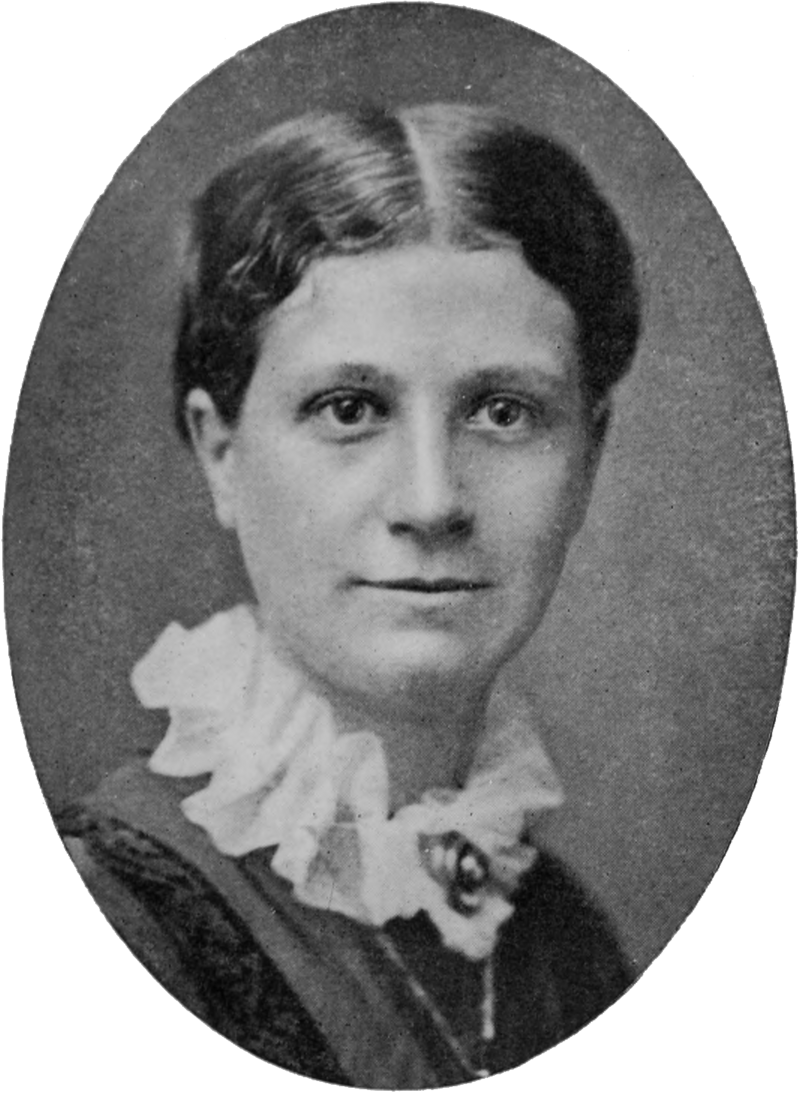
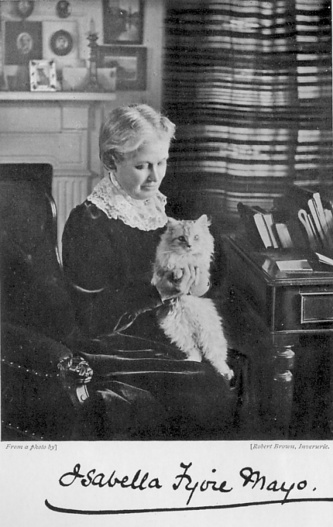
In our April blog, Lindy Moore examines the remarkable life and work of the Scottish Evangelical writer and campaigner, Isabella Fyvie Mayo. Mayo is notable for her willingness to publically challenge class and race ideologies and hierarchies. She allied herself with the local trades council and trades unions, and with Black and Asian peoples in criticism of racism and imperialism.
Isabella Fyvie Mayo spent the first half of her life in London. It was there that she was born in 1843, worked as a pioneering temping secretary from the age of sixteen, married John Ryall Mayo in 1870 and was widowed seven years later. She nevertheless claimed a Scottish heritage; her father George Fyvie, a baker, came from a North-East farming family, her mother’s family came from Aberdeen and the Borders.
An Influential Evangelical Author
Isabella’s influence was first felt in Scotland, England and overseas when she began to contribute stories, serialisations, and poetry, often written under the pseudonym “Edward Garrett”, to religious periodicals from the mid-1860s. Sir William Robertson Nicoll, minister and journalist, who grew up in an Aberdeenshire Free Church manse, considered that above all else it was the influential Scottish periodicals Good Words and The Sunday Magazine which had broken down the rigid Sabbatarianism of Victorian Scottish Nonconformism. Some thirty years later he could still remember his ‘thrill of delight’ in reading Isabella Fyvie’s early stories in The Sunday Magazine. Isabella continued writing throughout her life (partly from economic necessity). Changes in the periodical market, and in her own views and social contacts, meant that she had greater difficulty in getting her later fiction published, while many of her essays, reviews, and campaigning articles appeared in socialist, radical, co-operative, Indian and African American magazines. Nevertheless, her writing continued to combine her own deep religiosity and comprehensive Bible knowledge with her ecumenical and broad social interpretation of Christianity as an inclusive and loving faith.
Writer and International Anti-Racism Activist
When Isabella Fyvie Mayo settled in Aberdeen in 1878, she continued to promote her beliefs, later strengthened by Leo Tolstoy’s more controversial religious and political philosophy, in pursuance of her evangelical faith in the brotherhood of man, ‘below and above all details of creed, civilization, and colour’. She considered that actions were a more accurate reflection of peoples’ beliefs than anything they might say in church and in her own life she combined practical activities alongside her writing. For example, she took in student lodgers from Ceylon (Sri Lanka) and in 1882 she published a serial story in the Girl’s Own Paper about an unnamed university (Aberdeen), which hinted at some of the racial insults that foreign students, especially those of mixed-race heritage experienced. Her wide-ranging practical assistance for Asian students in Scotland resulted in her election as a corresponding member of the National Indian Association Committee in 1884.
In 1893 she was co-author, with Catherine Impey, an English Quaker, of one of the first analyses made by white women of the racist nature of the lynching attacks in the Southern States of the USA, and together they co-founded the Society for the (International) Recognition of the Brotherhood of Man (1893-97), launched at a public meeting in Aberdeen with Isabella as chairwoman, to campaign against imperialist aggression, racism, and religious intolerance. In 1897 Isabella was one of five British women who were elected as honorary (non-African heritage) members of the African Association, an organisation which went on to hold the first Pan-African Conference in London in 1900.
A Public Speaker
In support of these and other contentious causes, such as socialism and women’s suffrage, and opposition to militarism and vivisection, Isabella Fyvie Mayo addressed members of the Aberdeen Pleasant Sunday Afternoon movement, the Labour Church, teachers in the city-wide Aberdeen Sabbath School Union, YWCA groups and church literary societies, socialist organisations, and trades unions, speaking in locations such as Elgin, Tarves, and Huntly as well as Aberdeen, Dundee, Edinburgh, Glasgow and England. She was usually the only female speaker present. She gave her first public address in 1890, her last some twenty years later. Surprisingly perhaps, for someone so earnestly committed about such serious topics, this small, slight, chatty woman had a great sense of humour and consequently she was a popular speaker. But even she encountered hecklers sometimes, and when she spoke against the South African (Boer) War at meetings in Aberdeen and Edinburgh, alongside individuals such as Cronwright-Schreiner and Keir Hardie, her windows were broken in retaliation.
Racism and Imperialism in Scotland
In an anticipation of the Black Lives Matter movement, Isabella Fyvie Mayo noted that monuments had become fashionable, erected to ‘Scotsmen who have taken prominent part in spreading English dominancy over the world’, and she suggested that Aberdeen should erect one instead to its pioneering anti-slavery campaigner from Fraserburgh, James Ramsay. When a monument was proposed at Fochabers in memory of Allan Wilson’s Shangani Patrol in Matabeleland (Zimbabwe), Isabella wanted the inscription to record that the men had died through the treachery of two scoundrels of their own race. And she was possibly the only person amongst the many individuals who commemorated the birth anniversary of the influential Scottish writer Thomas Carlyle, in 1895, who referred to the elephant in the room — Carlyle’s racism and his support for slavery.
A Friend of Tolstoy and Gandhi
By 1900 Isabella Fyvie Mayo was helping Tolstoy’s Russian confidante, Vladimir Grigor’evich Chertkov, to improve the English of various Tolstoyan texts, and she became the only person “officially” permitted to add a commentary to some of Leo Tolstoy’s political articles during his lifetime, interpreting his views from a British perspective and applying them to the British Empire. She opposed anti-immigration sentiments in Britain and criticised the racism evident in all three British political parties, and in the Churches, before the First World War. She wrote and spoke of examples of racial discrimination and injustice in the British Empire, including the extermination of indigenous peoples in Tasmania and Newfoundland, the institutionalised discrimination of the Indian legal system and discrimination against Africans and British Indians in South Africa. In 1910 she was introduced by Chertkov to the future Mahatma Gandhi, with whom she corresponded regularly until her death in 1914. She publicized Gandhi’s passive-resistance campaign against colonial racism in South Africa, and his seminal work, Hind Swaraj, in which he criticized Western civilization and promoted home rule for India. (Published in 1910 Hind Swaraj was immediately banned by the Indian Government, although an English version circulated in Britain).
An International Centre in Aberdeen
Asians, African Americans, future Pan-Africanists, West Indians, Vladimir Chertkov, and Hermann Kallenbach (an Austrian-Jewish friend of Gandhi) were amongst those who visited Isabella in Aberdeen and on her death in 1914 Gandhi wrote a short commemoration in Indian Opinion.
Further Reading
“Edward Garrett”, ‘The occupations of a retired life’, The Sunday Magazine, 1867-1868 [Fiction]
“Edward Garrett”, ‘By still waters. A story for quiet hours’, The Sunday Magazine, 1873-74. [Fiction]
Isabella Fyvie Mayo, ‘Her object in life’, Girl’s Own Paper, Vol.3, 1881-1882. [Fiction]
C. Impey and I. F. Mayo, ‘Some facts respecting Lynch Law occurring within the past few months in the United States’, Anti-Caste, March and April 1893.
Isabella Fyvie Mayo, ‘Thomas Carlyle’, The Leisure Hour, 1895-96, pp. 15-21, 93-97.
Isabella Fyvie Mayo, ‘The Brotherhood of Man’, The Labour Prophet and Labour Church Record, October 1895.
I. F. Mayo, ‘Note by Isabella Fyvie Mayo’, in Leo Tolstoy, The One Thing Needful, translated by V. Chertkoff and I.F. Mayo, (London: Free Age Press, 1906).
I.F. Mayo, Recollections of Fifty Years (1910). [Semi-autobiographical, mainly covering her life up to 1870]
L. Moore, ‘The Reputation of Isabella Fyvie Mayo: interpretations of a life’, Women’s History Review, 19: 1, (2010).
L. Moore, ‘”‘A Notable Personality”: Isabella Fyvie Mayo in the public and private spheres of Aberdeen’, Women’s History Review, 22 (2), April 2013.
L. Moore, ‘From Russia with Love: Tolstoy, Gandhi and Isabella Fyvie Mayo’, Text. Book. Publishing, Tomsk, December 2014, 2 (6), pp. 56-71. [Online at https://independent.academia.edu/LindyMoore].
L. Moore, ‘Opposing Racism and Imperialism: Isabella Fyvie Mayo’s Search for Literary Space(s), 1880-1914’, in Empires and Revolutions: Cunninghame Graham & his Contemporaries, ed. Carla Sassi and Silke Stroh (Glasgow: Scottish Literature International, 2017).
L. Moore, R. Everritt, D. Stiff and M. Hastings, ‘Exploring Surrey’s Past. The March of the Women. Suffrage Biographies’. Isabella Fyvie Mayo. 2021 [Online at https://independent.academia.edu/LindyMoore].
Revised version of online entry in Quinepedia. A Biographical Dictionary of North East Women, 2022
Text Copyright © 2024 Lindy Moore
Cite this page as: Lindy Moore, ‘Isabella Fyvie Mayo (1843 – 1914): Scottish Evangelical Writer And Campaigner Against Racism, Imperialism, And Animal Cruelty’, 28 April 2024, https://womenshistoryscotland.org/?p=3072, accessed [todays date]
To contribute to our blog, please get in touch!