
We are pleased to celebrate the centenary of the birth of the writer Agnes Owens with a special blog by doctoral researcher Laura MacDonald. The centenary programme, hosted by The Agnes Owens Archive (AOA), includes a series of exhibitions, workshops, and a major book launch marking the reissue of Owens’ published works. In the following blog, Laura MacDonald shares insights from her research into the life and writing of Agnes Owens, as well as her work with the Agnes Owens Archive.
Who was Agnes Owens?
Agnes Owens was an important, albeit often unfairly overlooked, figure in late 20th-century Scottish literature. She was a working-class writer who came to writing later in life, and she primarily wrote short fiction. She is known for her sharp realism, laconic style and deft use of dialogue. Owens was born in Milngavie in 1926 and died in the Vale of Leven in 2014. As 2026 is the centenary of her birth, this is an exciting time to be part of the critical reappraisal of her work and celebration of her legacy.
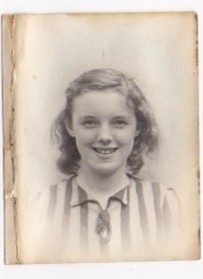
Life and Literature
Owens had both a rich and difficult life. She worked various jobs, including being a typist, a factory worker, and a cleaner. She lived predominantly in the West of Scotland but also spent a period of time in the Highlands with her first husband, Samuel Crosbie, after the Second World War. Owens had four children with Samuel. After he passed away, Owens married her second husband, Pat Owens, and with him had three more children. Their youngest son, Patrick, was tragically killed at the age of nineteen.
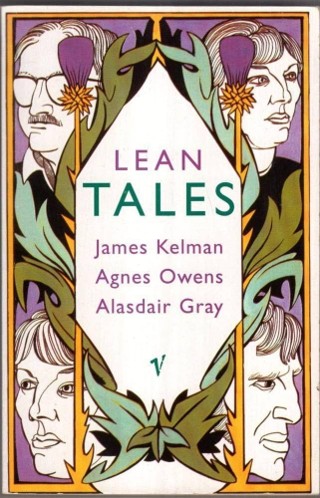
Owens was in her fifties by the time she came to writing more seriously. Her almost fabled origins as a writer are that she was ‘discovered’ by Liz Lochhead at an extra-mural writing group in the Vale of Leven in the mid-‘70s. It was at this group that Owens also met Alasdair Gray and James Kelman, also tutors at the group, two people with whom she went on to be great friends and writing collaborators.
This narrative of discovery risks obscuring the years Owens had already spent writing. She had her first short story, ‘A Hopeless Case’, published in The Scotsman when she was in her thirties, but family and domestic commitments meant that she did not have time to devote to writing as a career until she was older. It was around thirty years after the printing of that first story that her first book, Gentlemen of the West (1984), was published.
The Agnes Owens Archive
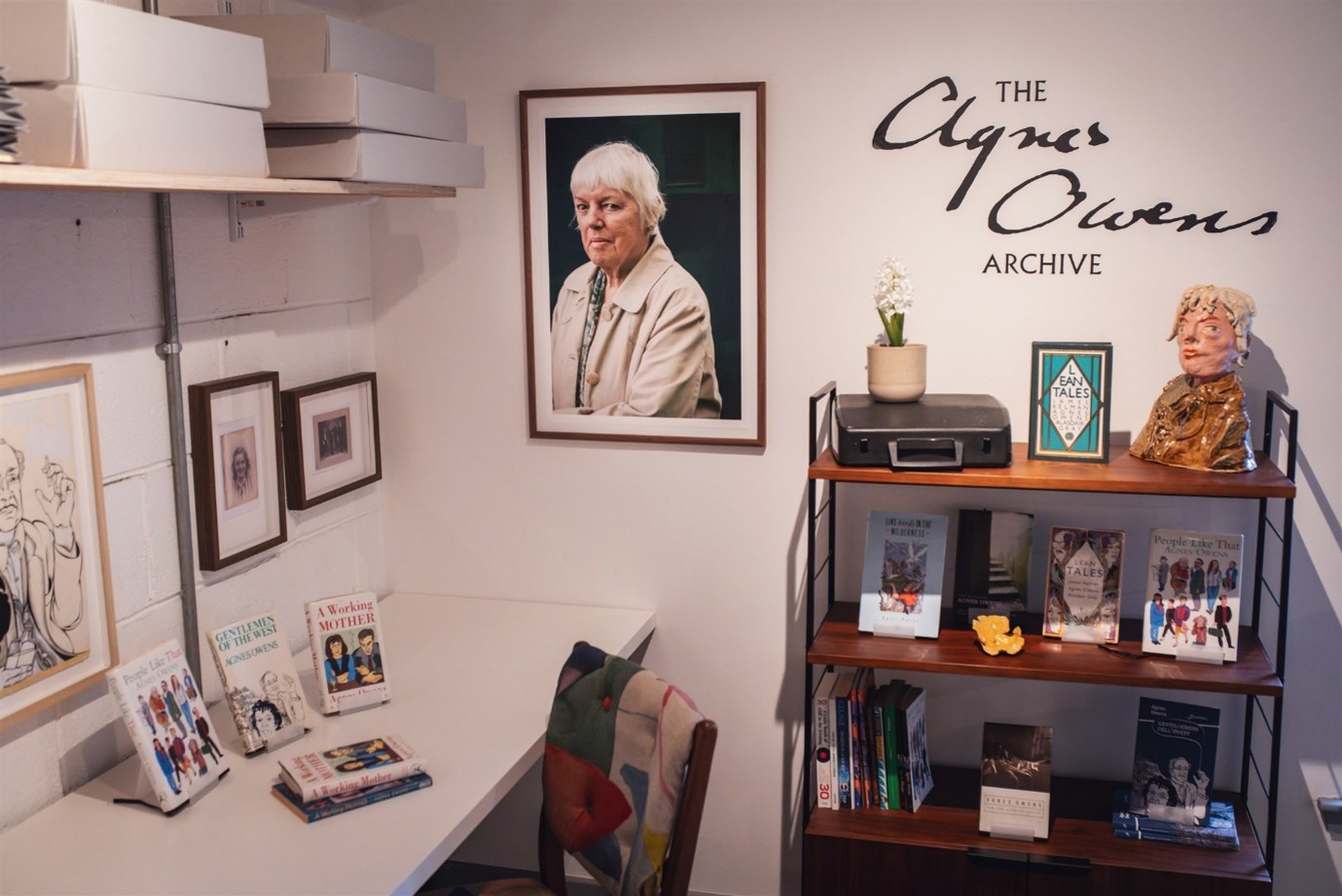
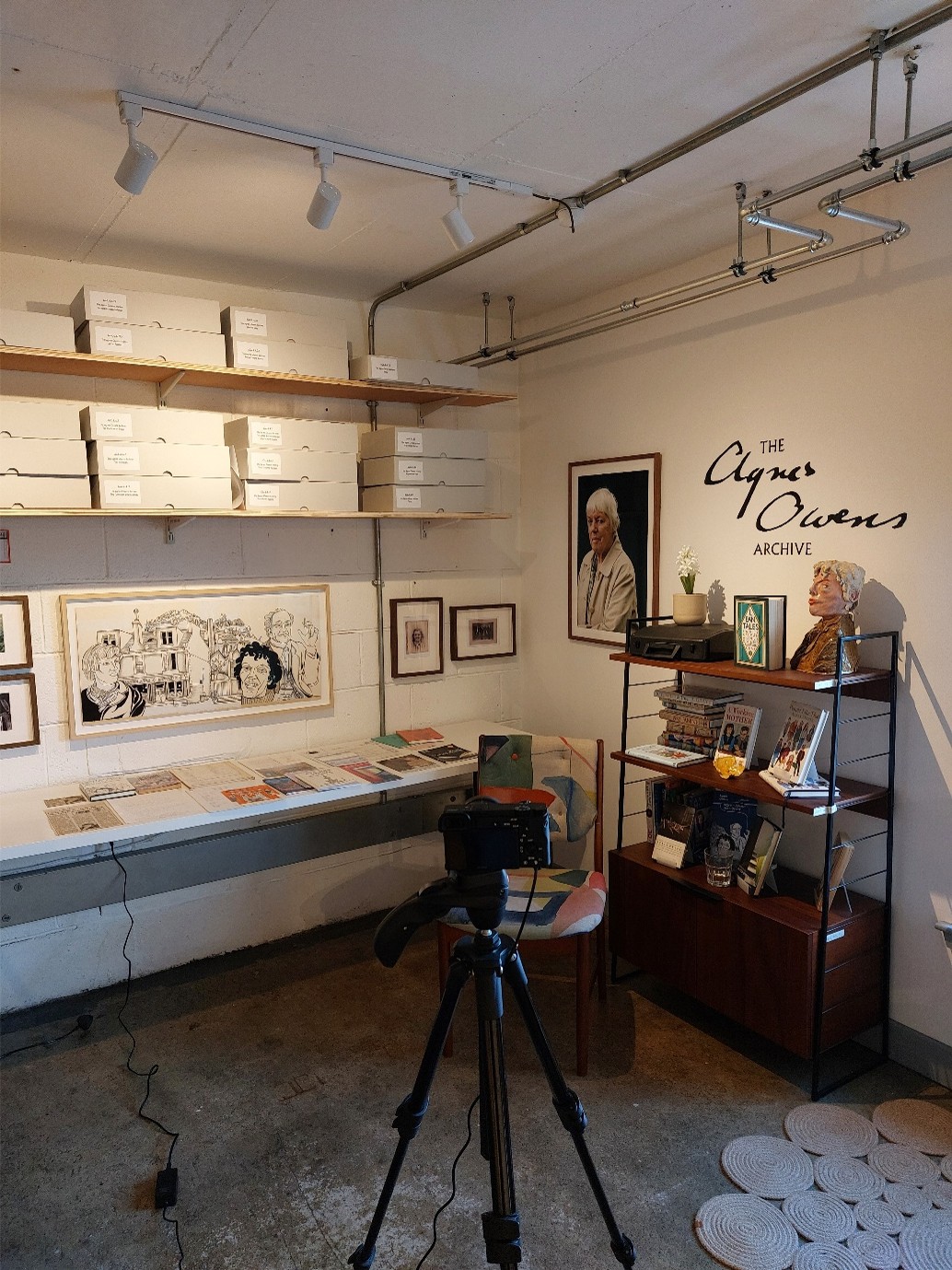
The new Agnes Owens Archive (AOA) opened to the public in January this year. It is the first satellite archive inside The Alasdair Gray Archive (AGA). The wealth of materials held in AOA show us how prolific a writer Owens truly was. It is a collection brimming with draft manuscripts of published and currently unpublished texts, photographs, correspondence, and newspaper clippings, all of which were thoughtfully collected and looked after by Owens’s family after her death in 2014.
The AOA began to take shape in 2022. During 2022 and ‘23, John Crosbie, one of Owens’s sons and now the literary executor of her estate, donated the core collection. The materials were subsequently reorganised and catalogued between 2023 and ’25.
Housing this collection within AGA reflects Gray and Owens’s shared ethics, literary values, and friendship. Gray and Owens collaborated in writing – they published a collection of short stories called Lean Tales (1985) alongside James Kelman – and they advised one another on their drafts. Gray also designed the cover art for many of Owens’s publications.
My first task upon arrival at The Archive back in October 2023 was the delightful undertaking of reading every single page, to identify what belonged to different texts or different points in Owens’s life. We then reorganised the papers, modelled on the method already implemented by AGA, in which the archivist takes an active, rather than a passive role in shaping the collection. The collection is now organised according to according to text and topic, and these are presented in chronological order, as far as possible.
Learning from Oral History
I am using oral history as a methodology in my PhD to gain further insight into Owens’ life and writing process. Although it is no longer possible to interview Owens herself, by interviewing the people who knew her well in a personal and professional capacity, we can map Owens’ life events and influences, which aids in contextualising her literary output. To do this, I have chosen to conduct in-depth, one-to-one interviews, which are semi-structured and use open questions that are tailored to individuals in relation to how they knew Owens. I often use items from the collection as memory aids, and so interviewees’ reflections can also be used as a means of collecting further information about specific materials, which can then be embedded into our catalogue.
Key topics which have cropped up throughout the interviews with Owens’ family, friends and writing collaborators are her interpersonal relationships, the impact of the Second World War, her various jobs, including her role as Union representative in Westclox, the drinking culture in the west of Scotland, politics – particularly the fact that she was a keen socialist – and her views on religion and spirituality.
Recollections of Owens’ personal biography often led interviewees to reflect on her writing. This is fascinating as I feel it echoes the way that Owens’ work is entwined with her life. The way that Owens creatively responded to her own lived experiences and those of her family, is a topic of discussion which has cropped up – often without me prompting the interviewee – in every interview I have conducted so far. The interviewees have made the connection between Owens’ keen observation of the world around her and her ability to put that in into writing with honesty and integrity.
Eventually, the full transcripts and audio-visual footage of these interviews will be archived at AOA, where they will sit alongside Owens’ own materials.
Centenary Celebrations
To mark Owens’ centenary, AOA has delivered a successful series of initiatives under the title of Agnes Owens: Out of the Margins, to celebrate her life, work, and enduring influence, delivered in partnership with her Estate and publishers, Polygon. This has included exhibitions curated by Sorcha Dallas the custodian of AGA and AOA, public talks, tours, and writing groups..
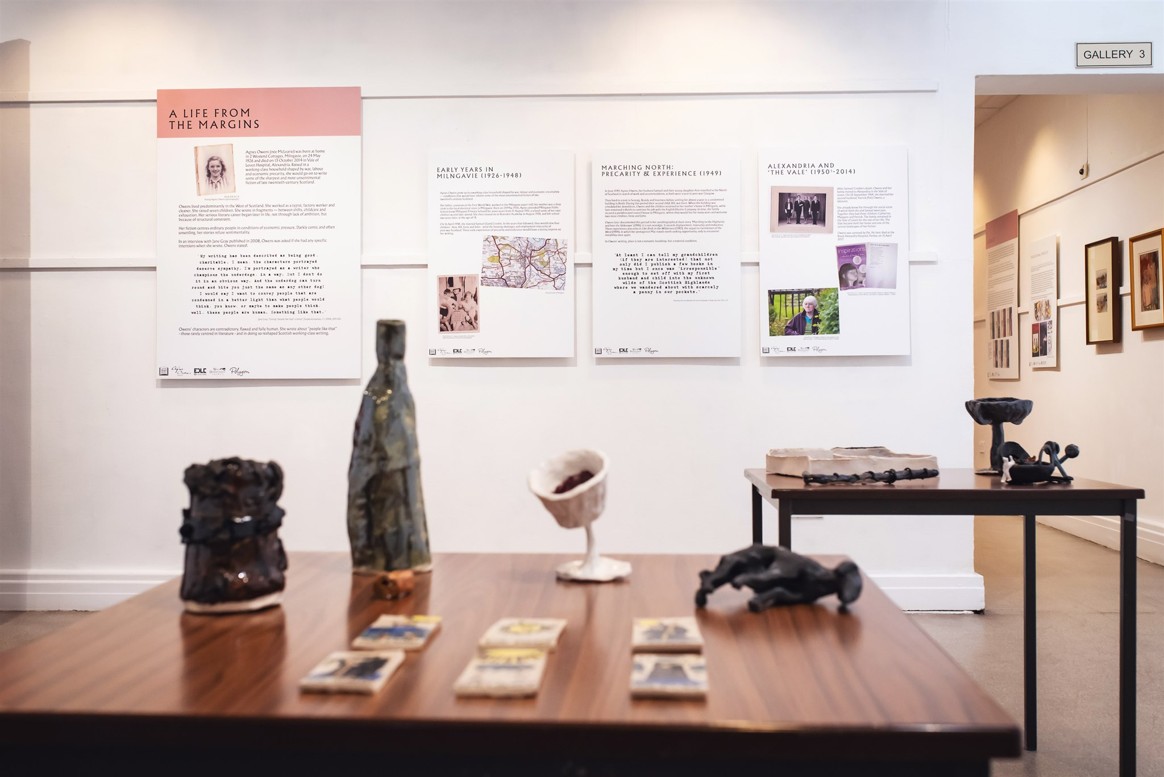
Whether it is a re-read or a new foray into Owens’ darkly comic stories of everyday, working-class life, 2026 is a great time to pick up one of her books, as all of Owens’ titles are being republished this year. Four titles were launched in May, and the final three will be launched in September. The republications, and a limited-edition centenary tote bag, are available to purchase through AGA’s website!
Further Reading and Information
The Agnes Owens Archive
Follow the Agnes Owens archive on Instagram
Follow on Bluesky
Jane Gray, ‘Giving “people like that” a Voice’, Études écossaises, 11 (2008): 207-223.
Author Biography
Laura MacDonald is a doctoral researcher at the University of Strathclyde, specialising in the life and literary work of Agnes Owens, with a particular focus on the marginalised voice. Her project is a Collaborative Doctoral Award, where she is co-supervised by the University of Glasgow and The Alasdair Gray Archive (AGA). Laura has been working in collaboration with AGA since 2023 to support the development of The Agnes Owens Archive (AOA). Laura’s research is titled Archiving Agnes Owens: Asserting the Marginalised Voice, and it is funded by the Scottish Graduate School for Arts and Humanities.
Text Copyright © 2026 Laura MacDonald
Cite this page as: Laura MacDonald, ‘Celebrating Agnes Owens’ Centenary’, Women’s History Scotland blog (04 July 2026), https://womenshistoryscotland.org/?p=4101, accessed [todays date]