
We are delighted to host a blog written by Dr Lauren Beatty about the Young Women Remember research project. Funded by the National Lottery Heritage Fund, the project aims to collect, record and share the stories of support, connection and activism linked to the Young Women’s Movement over the past 100 years.
The Young Women’s Movement, previously known as the Young Women’s Christian Association Scotland, has a history which dates back to 1924. In celebration of the organisation’s 100th birthday, a group of 14 young women peer-researchers embarked on a two-year co-design project tracing the history of the organisation, uncovering archival materials and capturing personal experiences from the women involved at different periods of the Movement’s 100-year journey.
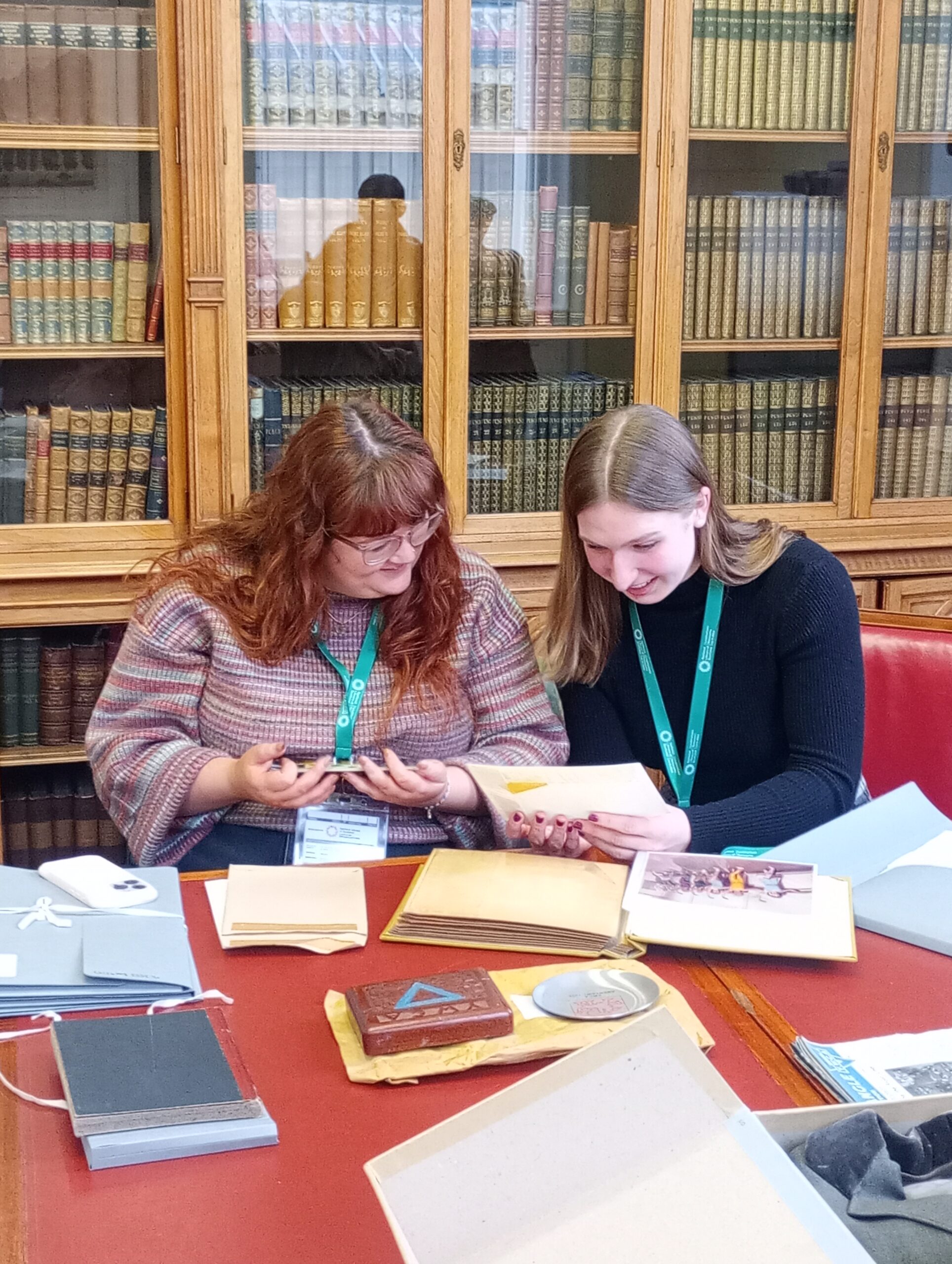
The Young Women Remember project was envisioned by CEO Jenni Snell, providing a platform for young women peer-researchers to respond to the increasingly urgent need to collect, record and share the stories of support, connection and activism linked to YWCA Scotland. Young women have curated oral histories, written testimonies, video interviews, images and archival material into a ‘living’ digital archive that will continue to grow.
Oral History interviews have been a powerful way of connecting young women peer-researchers with women involved with the movement from the 1950s, uncovering stories of friendship, community and connection, and rekindling relationships. Peer-researcher, Katie, shared the personal impact this experience has had on her:
This project has shown me just how powerful oral history can be, not just the finished product but also through the process and impact on everyone involved in this project. We have uncovered personal stories and perspectives from marginalised groups that would have otherwise been lost to history. The act of doing this has connected us to the young women that came before us, and shown what is possible. It has been deeply empowering and has inspired me to undertake an oral history project myself! [1]
Stories uncovered during the project highlight the invaluable services, programmes and initiatives the Young Women’s Movement has provided since the start of their journey as the Young Women’s Christian Association (YWCA), and the impact they have had. The YWCA had numerous centres around Scotland, which provided different initiatives, catering to the specific needs of their communities. Programmes and services provided at these centres included: intercultural creches; the International Summer School run by the Roundabout Centre; courses for women including ESOL, IT and Food and Nutrition; social activities, and the opportunity to participate in political campaigns. Due to funding cuts impacting the third sector across Scotland, these local buildings were gradually closed down, leading to the creation of a national organisation from 2014.
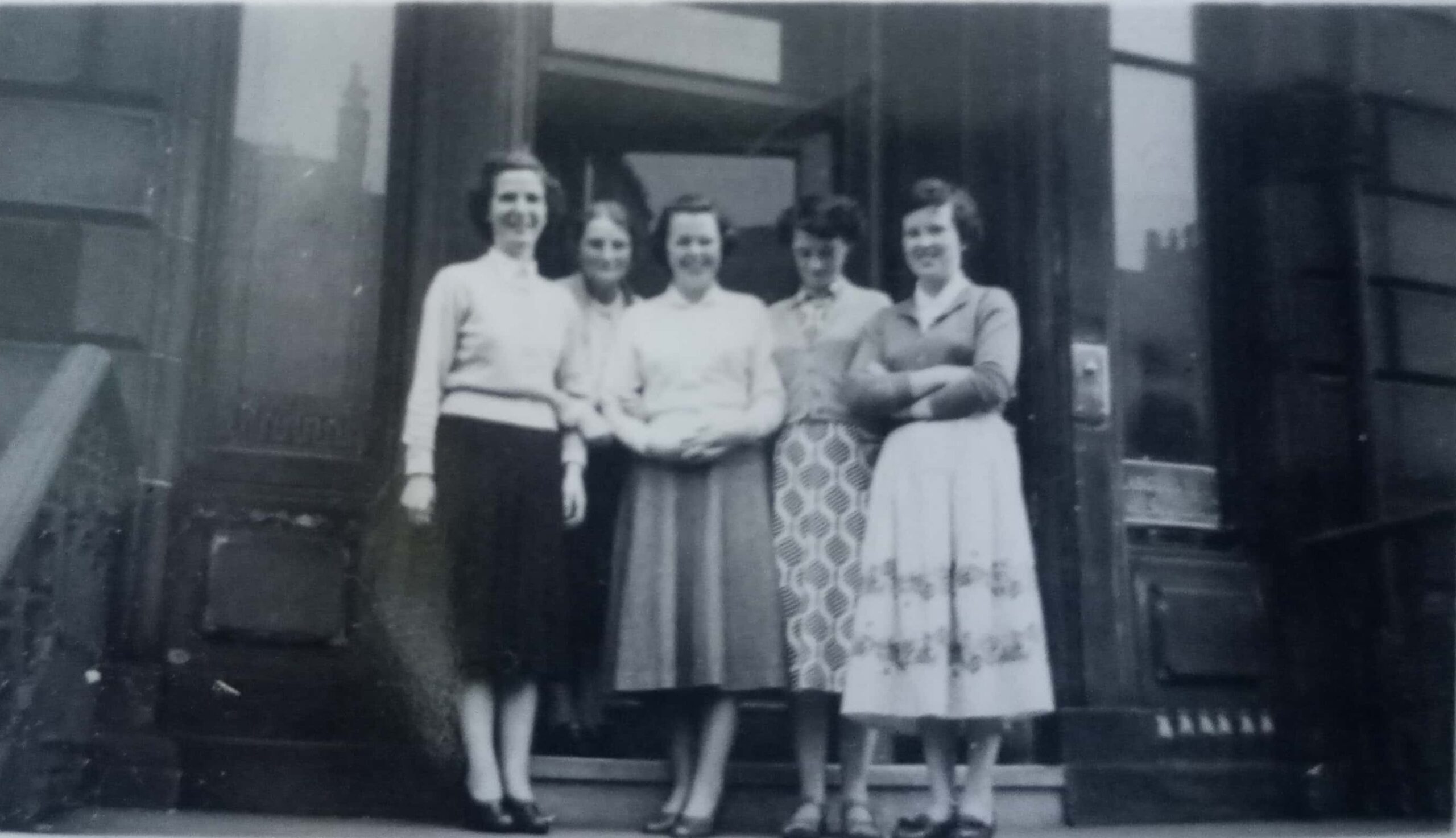
The YWCA also provided safe and affordable accommodation in the form of hostels which were popular particularly during the 1950s and 60s for young, working women living away from home. For Oral History interviewee, Ellen, living in a YWCA hostel in Glasgow from the age of 19 in 1957, gave her a new sense of freedom she had never experienced before:
I absolutely loved every minute, it just changed my life.[2]
Historically, the Young Women’s Movement was part of a global Christian organisation. The YWCA Great Britain began in 1855 when Emma Roberts Mary and Jane Kinnaird formed a Prayer Union and ‘home with evangelical purpose’ for young women in London. An Edinburgh branch of the Prayer Union was formed in 1859 and by 1877 the prayer groups became united as the Young Women’s Christian Association, with 21 branches in Scotland. In 1924, YWCA Scotland succeeded from the YWCA of Great Britain, forming an independent organisation. This is when the Young Women’s Movement’s story officially began. In 1969 the aims of the organisation were adapted to include:
Recognising the equal value in God’s sight of all human beings without distinction of race, nationality or religion. [3]
Prayers remained a part of committee meetings up until the late 90s and were a morning ritual at hostels, however, Oral History interviews communicate that participation was not compulsory.[4] The Christian roots of the YWCA are an important part of the Movement’s history, along with its global connection as part of a world-wide organisation representing women and girls. However, by the ‘90s, it was becoming increasingly apparent that the link to Christianity was not inclusive and representative of Scottish society.
The move to a secular, national movement was gradual. The name Young Women’s Movement was introduced around 2014, with the organisation being known as the YWCA Scotland – The Young Women’s Movement. In 2023, the organisation rebranded completely, with a new strategic vision underpinned by intersectional feminist principles and a renewed focus on representing the needs of all self-identifying young women and girls in Scotland aged 16-30. Today, the Young Women’s Movement runs several different programmes designed to provide young women and girls with the space and resources to create a safe, gender inclusive society in Scotland through co-design, peer-research, policy influencing and political advocacy.
To find out more about the history of the Young Women’s Movement, visit our digital archive where you can uncover stories from women involved at different stages of the organisation’s journey.
[1] Katie Field, YWR peer-researcher, April 2026.
[2] Oral History Interview, Ellen, October 2025.
[3] Draft history of the YWCA, National Library of Scotland.
[4] Oral History interview, Dona Milne, December 2025; Oral History interview, Ellen MacSween, October 2025.
Author Biography
Dr Lauren Beatty is a Feminist Oral Historian, currently working as Heritage Research Coordinator leading on the Young Women Remember Project at the Young Women’s Movement. This blog post has been written with reflections from Young Women Remember peer-researchers.
Text Copyright © 2026 Lauren Beatty
Cite this page as: Lauren Beatty, ‘Young Women Remember: 100 years of the Young Women’s Movement’, Women’s History Scotland blog (01 June 2026), https://womenshistoryscotland.org/?p=4052, accessed [todays date]