
This month Steering Committee member Alison McCall has written a blog that tells a fascinating story about her Highland family history. Alison provides insight into nineteenth-century emigration from the Scottish Highlands, questioning women’s motivations for leaving their home, and sometimes their husbands and families behind.
Emigration from the Highlands during the 1850s and 1860s was primarily the result of poverty at home and the lure of improved opportunities elsewhere. In this blog, I examine the emigration of three members of my own family – sisters Catherine and Johan McLeod and their stepmother Jane Polson, who emigrated from East Sutherland to Australia in 1858, 1863 and 1860 respectively.
Jane Polson married on 12 March 1858, a fortnight prior to her twenty-first birthday. She had known her new husband all her life. He was a neighbour, 44-year-old widower William McLeod. They lived in Marrel, near Helmsdale, East Sutherland. Both the Polsons and the McLeods had been cleared from Torrish, in the Strath of Kildonan during the Highland Clearances and settled on marginal land in Marrel as tenants of the Duke and Duchess of Sutherland.
Both William’s mother and paternal grandmothers had been Polsons; it was possible that Jane and William were distantly related. Marrel was an extremely tight-knit community. It was too poor to attract in-migration, and it included a complex web of intermarriages.

William had married his first wife, Betsy Sutherland, on 1 March 1839 and they had three children: Catherine born 12 November 1839, Johnann (or Johan) born 14 October 1841 and William, born approximately 1845. Betsy died sometime between William’s birth and the 1851 census. The newlywed Jane was, therefore, only two years and eight months older than her stepdaughter Catherine. Jane’s three youngest siblings were younger than her youngest stepchild. Jane’s parents had married less than four years before William’s marriage to Betsy.
Three months after William and Jane married, William’s daughter Catherine left home. On 2 July 1858, she was on board the Golconda as it set sail from Liverpool, bound for Australia. She arrived in Sydney on 20 October 1858. She stated that she could both read and write, that her bodily health was good, and that she had no relatives in Australia.
The family story is that she emigrated without having any clear idea of where Australia was. She was eighteen.
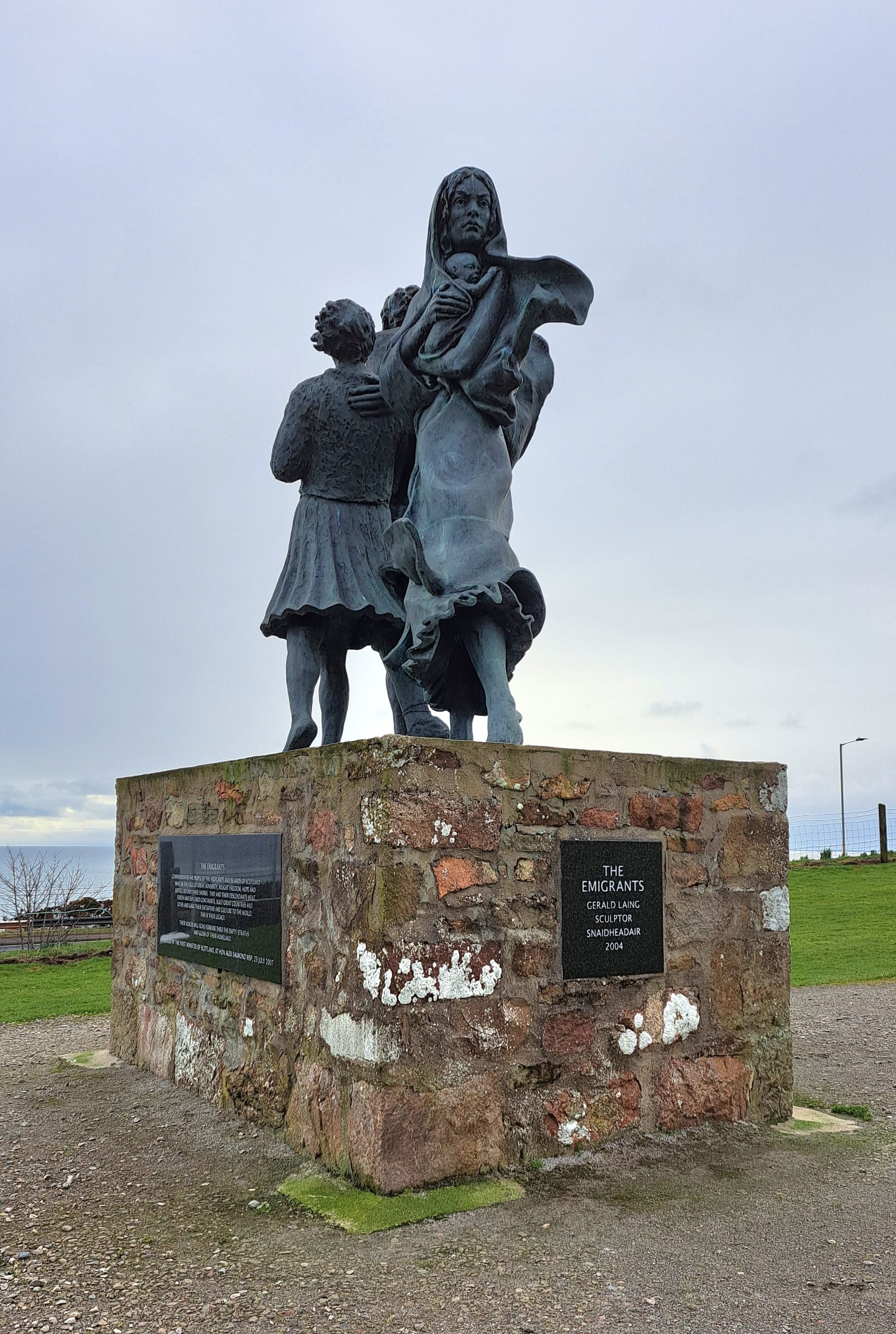
Why had Catherine emigrated? Had she quarrelled with her father and stepmother? Or had she planned to go, and her father had re-married in anticipation of his eldest daughter’s departure?
Although Catherine had no relatives in Australia, former neighbours from Marrel had already emigrated. In 1857, Angus Polson, his wife Barbara and their eight children had also sailed from Liverpool and had settled in Victoria. Angus Polson, however, as well as being a former neighbour was Catherine’s stepmother Jane’s uncle. Had Catherine been on good terms with her stepmother’s family when she left?
Two years later, Jane Polson emigrated. She arrived in Australia on 25 November 1860 as an unassisted immigrant on the Lord Raglan. Had she run off and left William? Had they mutually agreed that she would go? She had lived with her husband for two and a half years; there were no children in the marriage. Jane joined her uncle and his family in Victoria.
It appears that Catherine was also living close to the Polsons, who had settled at Lake Learmouth, Victoria. On 12 March 1861, Catherine McLeod married Thomas Greening at Ballarat, just 25 km from Lake Learmouth. After his death, she remarried, to Frederick Hiubach.
Jane Polson met and formed a relationship with Robert Ward. They were unable to marry, as Jane was married. However, they passed themselves off as a married couple and registered their children as legitimate. The first of their seven children, Mary Ann, was born on 6 April 1862. They eventually married in 1882, by which time William had died and Jane was free to remarry.
Finally, William’s second daughter Johan, emigrated. She was probably the Johannah McLeod aged 20, from Sutherlandshire who emigrated on the Mary Shepherd and arrived at Adelaide on 19 April 1863. She married James Thomson at the Presbyterian Manse, Dunnolly, Victoria, Australia, on 29 February 1872.
“if you thought that I would do Better there than hear, I would Sel of Everything and go there unless you Could Come to me.” […] “I must with my love to and all the famley and Johan and husband, I am yours truly Father William McLeod”
If there had been a rift between William and his elder daughter, it appeared to have mended. In 1874 he replied to a letter from her in affectionate and chatty terms, with news of various aunts, uncles and cousins. He added, “if you thought that I would do Better there than hear, I would Sel of Everything and go there unless you Could Come to me.” He signed off “I must with my love to and all the famley and Johan and husband, I am yours truly Father William McLeod”
We do not know how often letters passed between Scotland and Australia; this letter was preserved by Catherine as it was “Father’s Last Letter.” He died six weeks later after a sudden illness.
Why did these three young women emigrate as lone women? All three were bilingual Gaelic / English, but Gaelic was their first language and speaking English would have been a further challenge. Catherine was 18, Johan 21, and Jane 23. Had favourable stories about Australia been circulating Marrel since Angus Polson and his family emigrated? Was the endemic poverty in Marrel so bad that they could see no future in remaining? Less drastic options such as becoming domestic servants in Golspie, Dornoch or Inverness existed.
Were Catherine and Johan in contact with their stepmother in Australia? Or was it by chance that they ended up living in the same area of Victoria?
Had William’s marriage to a woman less than half his age created a situation intolerable to not only his two daughters but also to his wife?
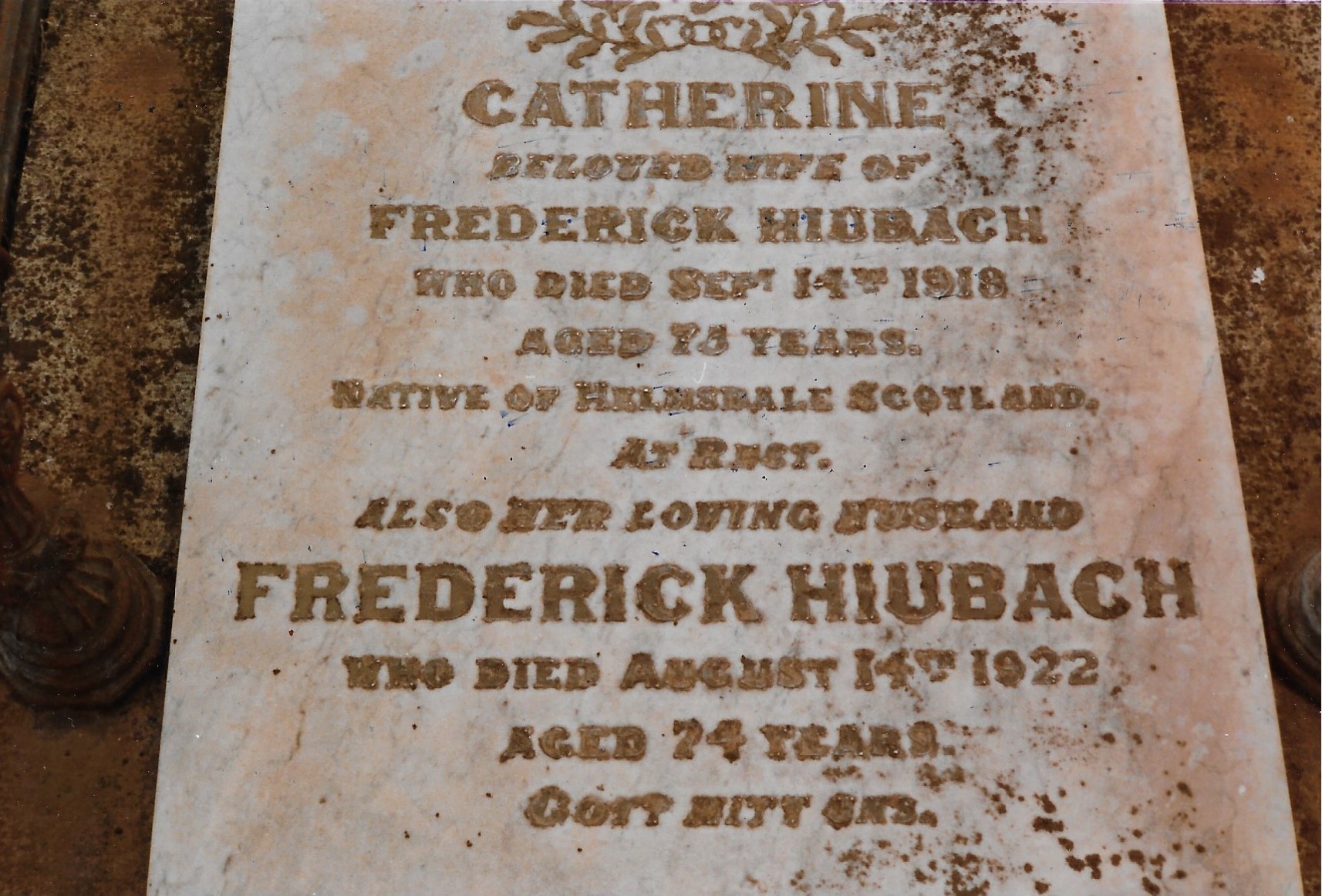
Author’s Note: William McLeod and Betsy Sutherland were my 3 x great-grandparents. I am descended from their son William. The three emigrants appear to have prospered in Australia. By contrast, William, jr, who remained in Marrel all his life, experienced extreme poverty in the 1880s, explaining to the School Board that his children were not attending school because he could not afford shoes or clothing for them.
Text Copyright © 2024 Alison McCall
If you wish to read more of Alison’s work, her recent publication Bringing Life to Aberdeen chronicles the history and development of midwifery and maternity services since their inception in Aberdeen and it available to purchase here.
Cite this page as: Alison McCall, “Three Emigrants: Two Sisters and a Step-Mother,” Women’s History Scotland blog (15 February 2024), https://womenshistoryscotland.org/?p=2967, accessed [today’s date]
To contribute to our blog, please get in touch!