
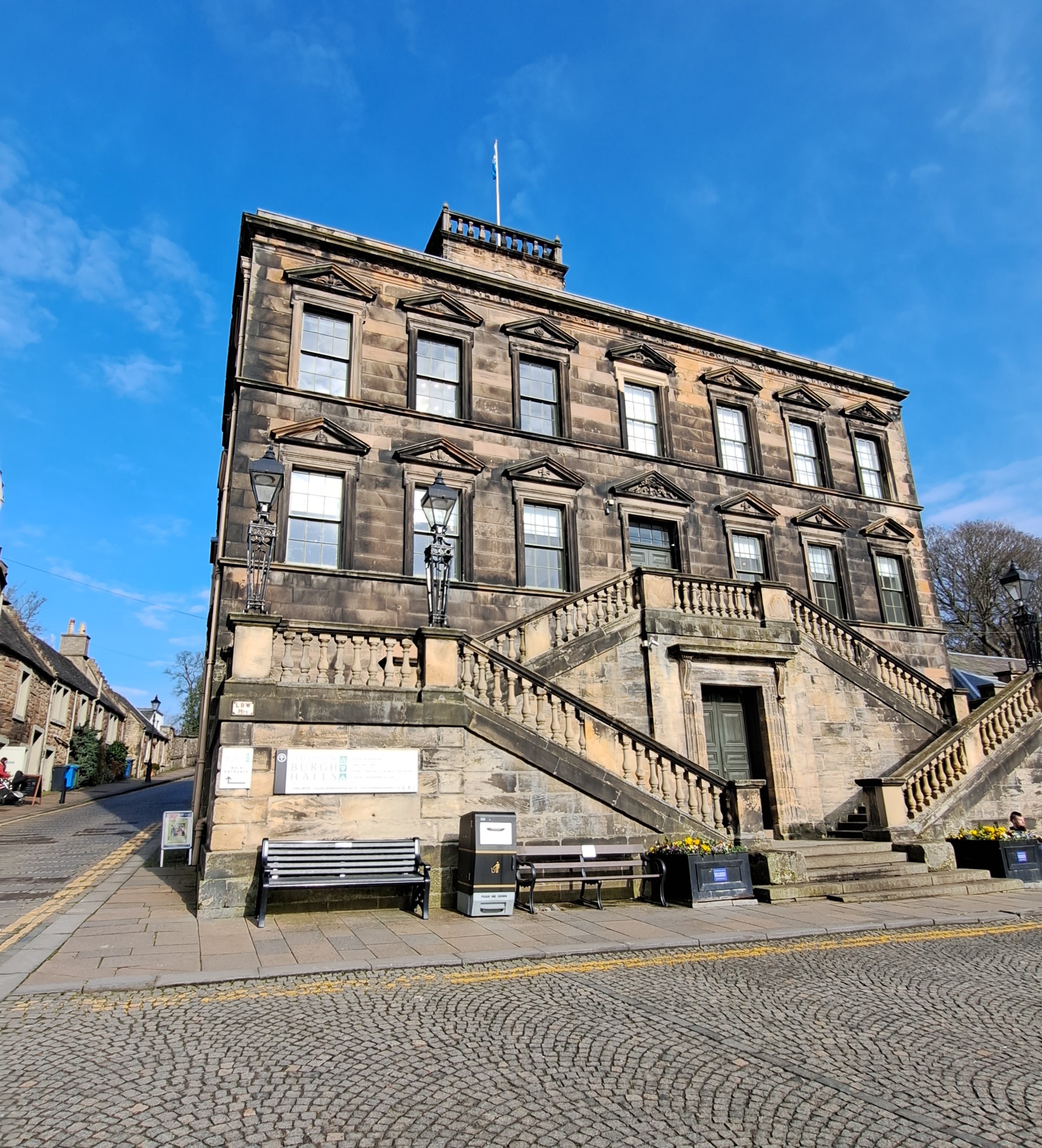
On International Women’s Day, WHS Steering Committee members Eleanor Peters and Hannah Speed journeyed to the beautifully restored Linlithgow Burgh Halls to attend an inspirational ‘Women in History’ event. The event’s organisers, all PhD candidates and postgraduate students at Scottish universities, delivered a day filled with concurrent sessions featuring insightful talks, interactive workshops for all age groups, and historic tours of Linlithgow Palace and St Michael’s Kirk. Impressively, the entire event was offered free of charge to attendees, funded by the Society of Antiquaries of Scotland.
In this Out Gallivanting post, Eleanor and Hannah will share the highlights of ‘Women in History’ – a day where creative energy and enthusiasm flowed, no doubt aided by the sunshine and the picturesque surroundings.
Morning Sessions
The day immediately got off to a strong start with two sessions by PhD students at the University of Glasgow. We heard from historian Ashley Brown, who discussed “The Medieval Economy of Sexual Violence”. The talk explored how different types of twelfth-century literature, including romances, histories and chronicles, depicted sexual violence. Ashley evaluated what this can teach us about medieval gender relations, and particularly how literary sources can be used to reveal wider attitudes for a period when few historical sources survive. While it is possible to trace how sexual violence was used as a plot device in male hero narratives and as a symbol of threat to the political order, Ashley explained that this literature rarely reveals medieval women’s voices.
In parallel, Heather Ford, in Celtic studies, spoke on “Pictish Women/ Reading Pictish Art: Where are the women?”, illustrating how art and iconography can help us to understand women’s role in Pictish society.
Throughout the morning, kids’ activity sessions ran on the theme of “Identifying Inspiring/Interesting Women Around You”. These encouraged children to think about the inspiring or interesting women in their lives and communities, and create artwork and writings to celebrate them.
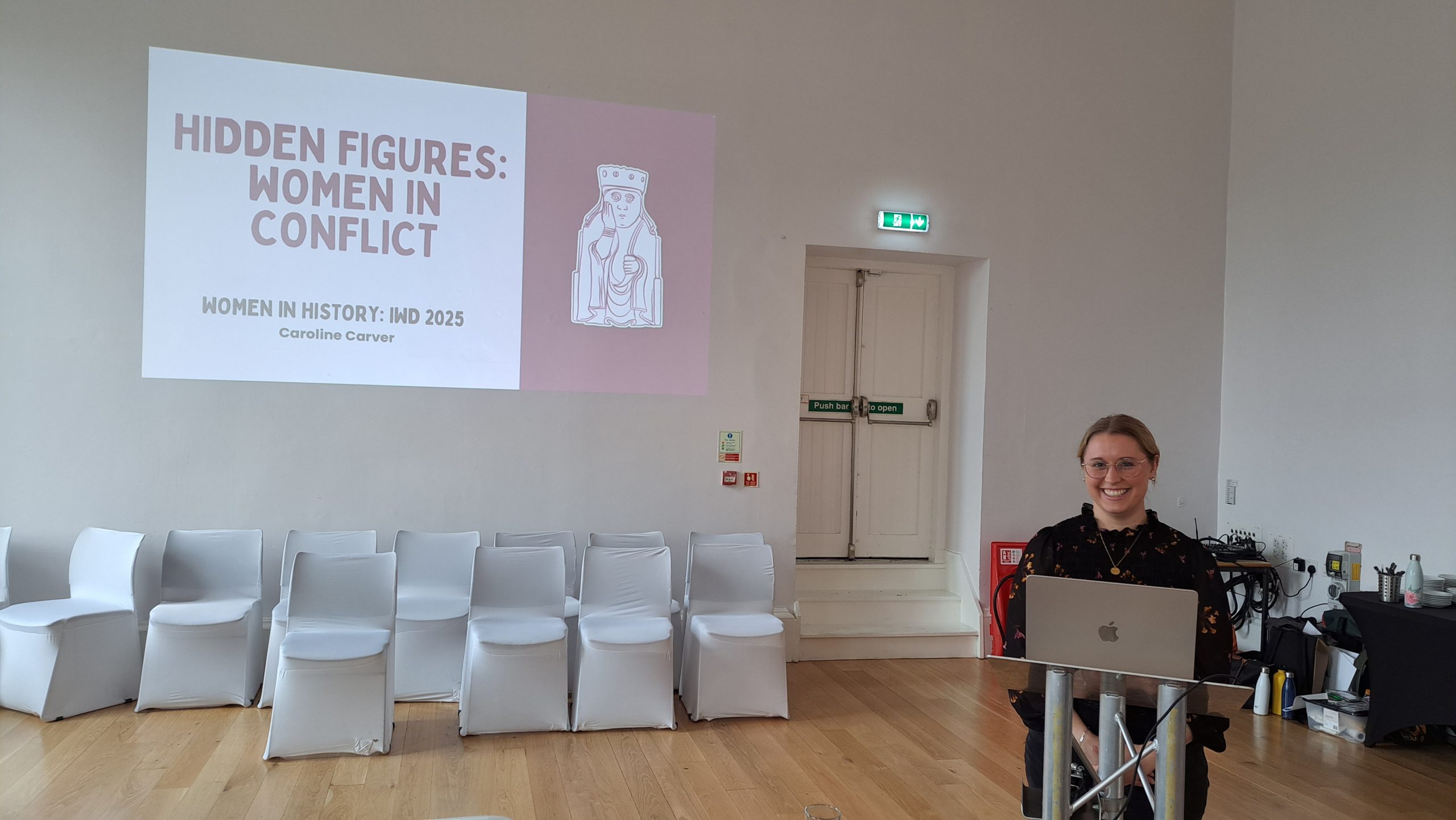
After a quick break for coffee and biscuits, it was time for a talk on “Women in Conflict”, by Caroline Carver, research masters student in conflict archaeology at the University of Glasgow. Caroline argued that generally women are categorised into ‘victim’ or ‘auxiliary’ roles in conflicts, and societies both past and present have struggled to conceptualise women being directly involved in wars or as the perpetrators of violence. Yet, through using notable examples from pre-history to the present day, she illustrated that women have always been actively involved in conflict. A lively discussion afterwards considered how to acknowledge women’s capacity to fight, and role in historic conflicts, without celebrating violence.
A concurrent session, “Over Hillways Up and Down: exploring craft, learning and female spaces in the early-modern highlands”, hosted by Edward Stewart, an Archaeological Research Framework Engagement Officer and Lizzie Robertson, an archaeological researcher, explored the impact of women’s labour on knowledge systems and the Scottish landscape, focusing on early modern Glencoe. Through archaeology and traditions like work songs, this session highlighted how female crafts once shaped the environment and invited participants to reimagine these now-silent spaces as vibrant and active once more.
Afternoon Sessions
After lunch at a local deli, we attended a creative workshop “The Witch as Healer – A National Galleries of Scotland Outreach Project”, hosted by Ailbhe Turley, a Workshop Leader at the National Galleries of Scotland and PhD candidate at the University of Glasgow.

Inspired by the current Everlyn Nicodemus exhibition at National Galleries of Scotland Modern One, this workshop explored themes in the exhibition centered around femxle empowerment, the concept of ‘The Witch as a Healer’ and innate divine feminine wisdom. In a video exploring her route to art, Everlyn discussed witches as women who challenge patriarchal norms, noting that across cultures, the term has often been used to persecute and disempower those with knowledge, like the herbalists in her Tanzanian heritage.
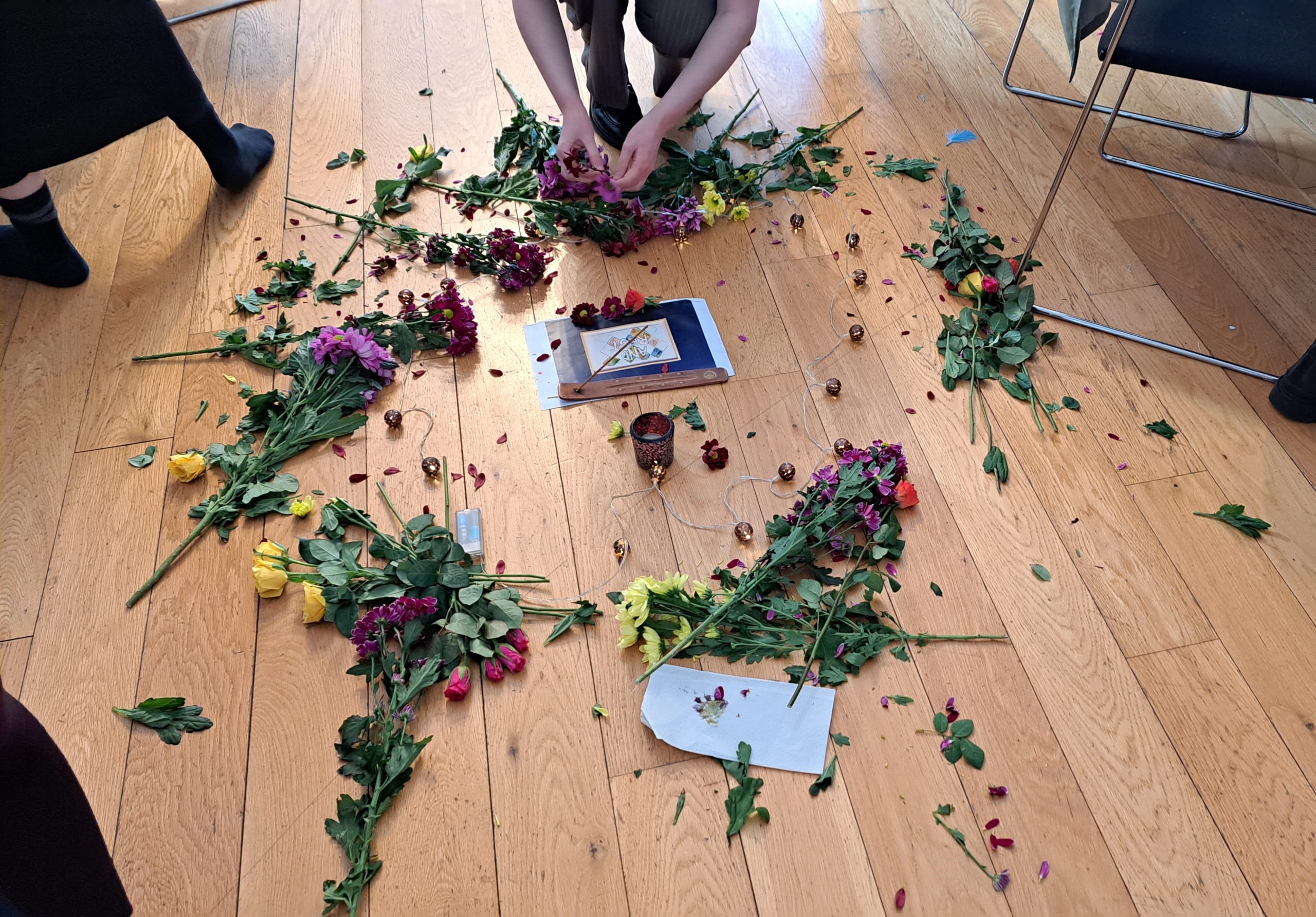
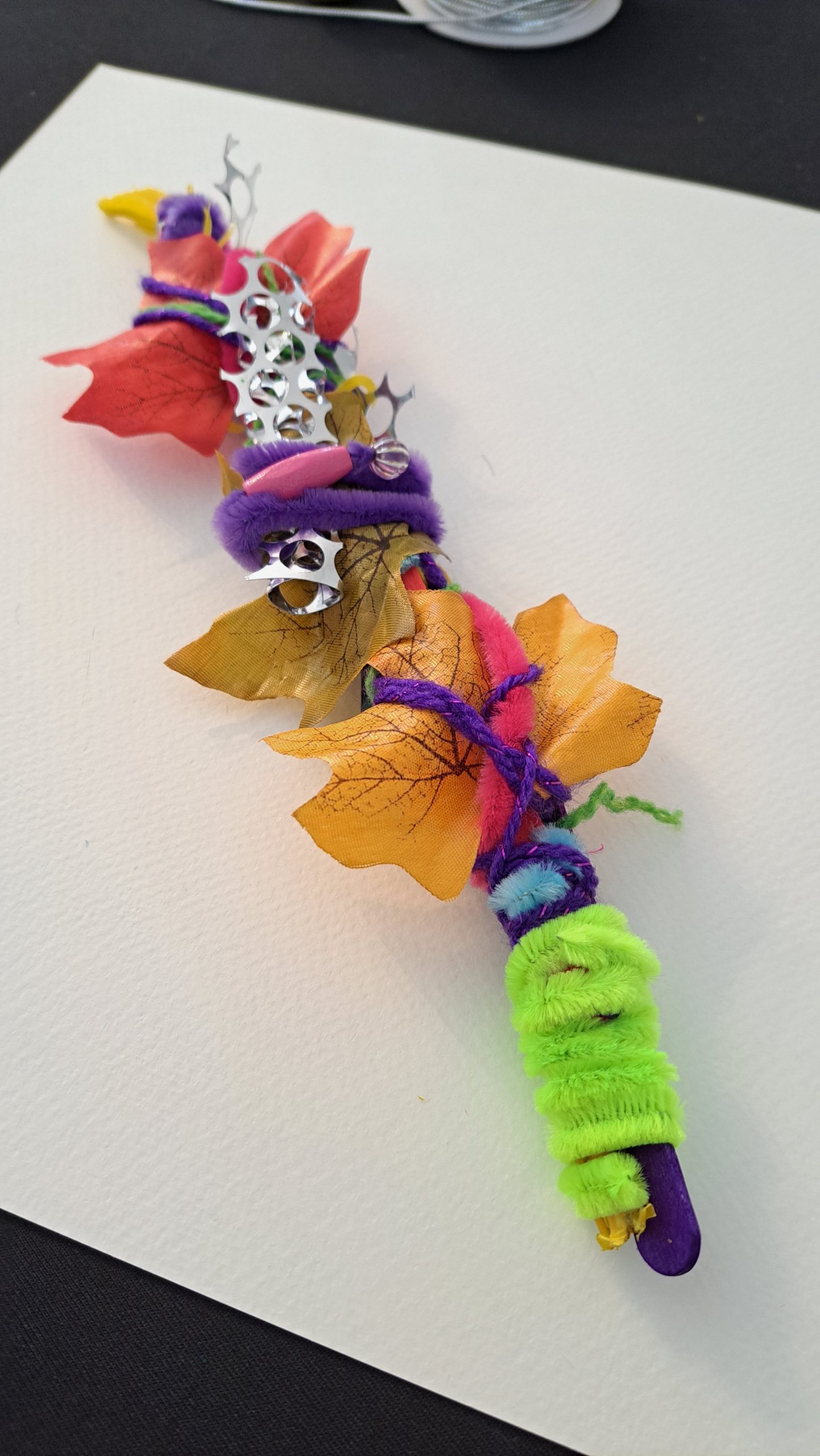
Ailbhe put our artistic abilities to the test as we each attempted to create our own ‘assemblage’ – inspired by an Indigenous American Bundling Practice. Feathers, beads, lollipop sticks, pipe cleaners, wool and fabric were all provided! We toiled on our assemblages while a carefully curated playlist of Fleetwood Mac and Faith Hill serenaded us. The workshop culminated in a frantic and raucous introduction to ‘flower pounding’ – a craft technique where you place fresh flowers face down on a piece of paper and then (gently!) tap them with a hammer to transfer their natural pigment onto the paper, creating a unique floral print. The practice was deceptively challenging, but certainly therapeutic!
Concurrently, Beth Price, a PhD researcher at the University of Edinburgh, hosted a workshop exploring early twentieth-century Chinese media, art, and popular medicine to investigate historical representations of women. Through interactive collage-making, participants examined how media shaped narratives of gender and femininity rather than defining a singular ideal.
A third activity session, suitable for all ages, offered attendees the chance to explore history through artefact handling. These historical objects were used to uncover their stories, and engage in discussion for a tactile and immersive connection to the past.
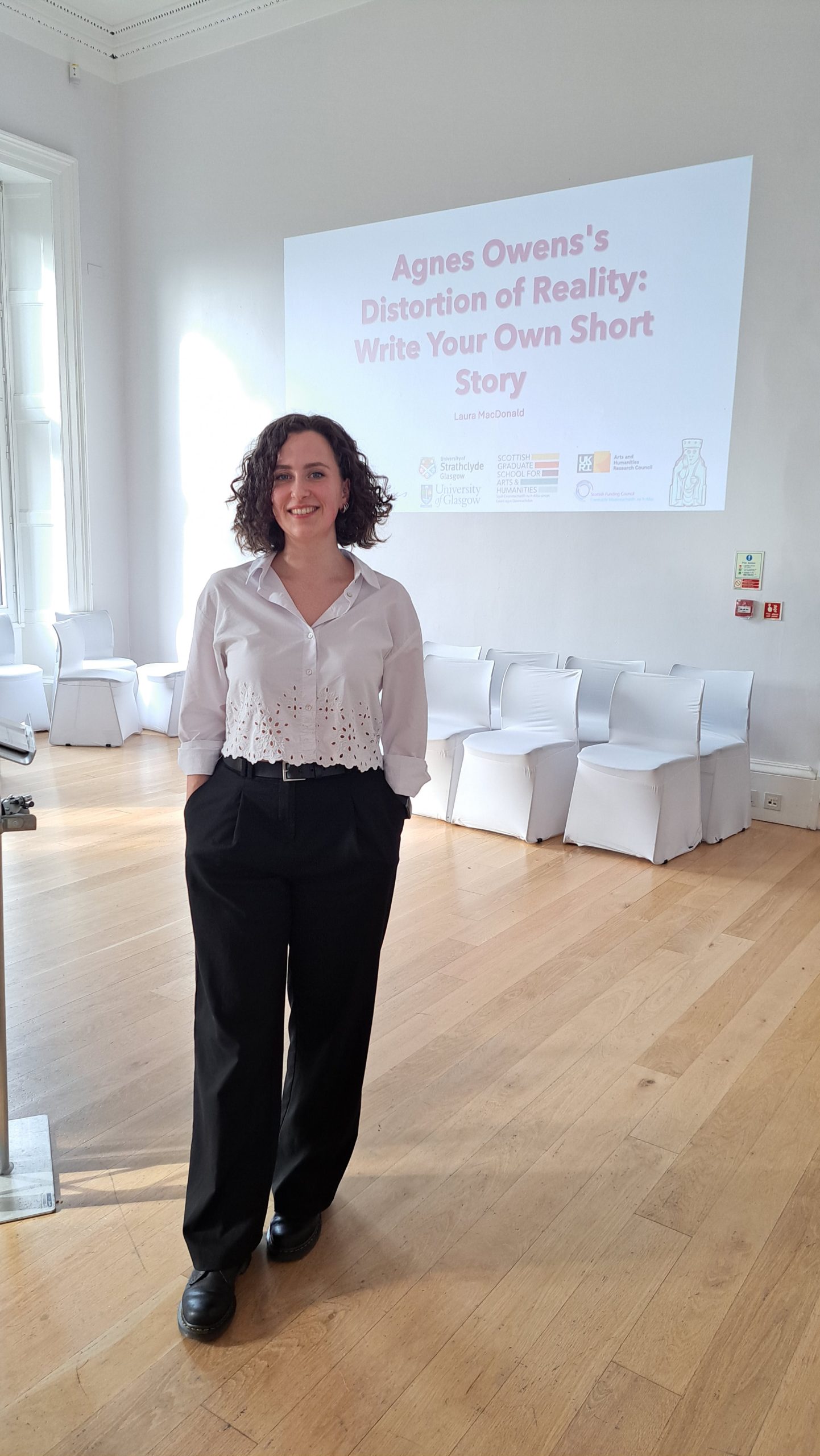
A creative-writing workshop, inspired by the twentieth-century Scottish author Agnes Owens, was hosted by Laura MacDonald, a PhD student in English at the University of Strathclyde. Drawing from ‘Arabella’, a short story written by Agnes Owens, Laura asked participants to write about an ordinary situation or everyday experience becoming distorted by the unexpected. The results included stories of commutes to work taking a perilous turn, mass power cuts prompting people to look to the stars in wonder, and a human skeleton appearing in a gift shop stockroom!
“Memory and Identity: Women in the Auld Alliance”, led by University of Glasgow PhD student Ally Parker-Banks, explored the remembrance of women in the Auld Alliance, focusing on their depiction in archaeology and their legacy in France and Scotland through short film clips. The workshop also examined how women are commemorated in communal spaces.
Linlithgow Palace Tour
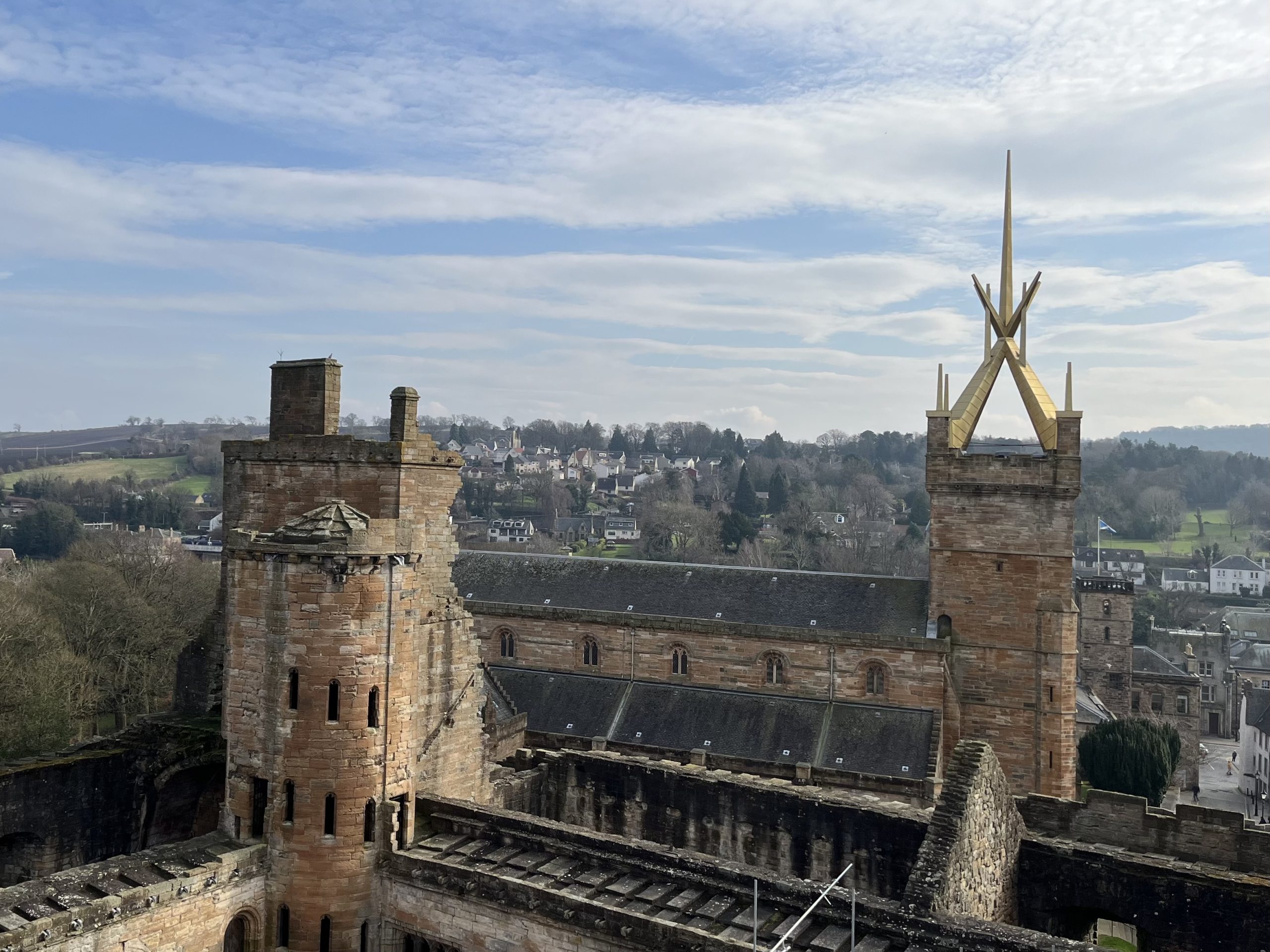
Alongside the sessions, attendees were treated to a guided tour of Linlithgow Palace with a special international Women’s Day theme. The talk traced the history of the site from its earliest incarnation as a hunting lodge to the spectacular palace. Amongst the beautiful old stonework, we learned all about the Scottish queens who had stayed at the palace, raised royal children there, or were connected with its rebuilding and development, from St Margaret of Scotland to Mary Queen of Scots. After plenty of stone spiral steps, we were rewarded with stunning views of Linlithgow from the top of the palace to finish the tour.
Keynote
Ingrid Shearer, the Heritage Engagement Manager of the Glasgow Building Preservation Trust and a self-described ‘recovering archaeologist,’ delivered the thought-provoking keynote “Who Gets to Speak in Heritage?” She revealed the results of a somewhat covert project in which she participated, gathering data on the disparity in women’s representation in heritage.

After analysing years’ worth of data on guest speakers at heritage societies, comparing the number of female and male authors in History Scotland magazine, and assessing which experts were consulted in The People’s History Show, the findings exposed a stark gender imbalance favouring men. Yet, Ingrid offered reasons for optimism—citing the recent successes of the ‘Women in Scottish Sports History’ project, Wiki-Editing Workshops and Wiki Walks initiative. (Women’s History Scotland has previously collaborated with Protests & Suffragettes and Wikimedia UK on a series of workshops that taught participants how to add and improve Wikipedia entries to help redress the online encyclopedia’s gender bias.)
Ingrid concluded with an inspirational challenge, urging us to take her research forward and work toward closing the gender gap in women’s representation in heritage roles.
Conclusion
The International Women’s Day celebration in Linlithgow was a fantastic opportunity to meet like minded people, hear inspiring talks, and have some fun trying out the hands-on activities. Linlithgow, with its historic Burgh Halls, Palace and Kirk, was the perfect setting for the day. From this whirlwind tour of the wide variety of women’s history research and activism going on in Scotland today, it’s clear that the future for Scottish women’s history looks bright.
Text Copyright © 2025 Eleanor Peters and Hannah Speed
Cite this page as: Eleanor Peters and Hannah Speed, ”Women in History’: International Women’s Day 2025′, Women’s History Scotland blog (24 March 2025), https://womenshistoryscotland.org/?p=3655, accessed [today’s date]
To contribute to our ‘Out Gallivanting’ blog, please get in touch!